Wariga, the Archipelago and Cultural Transformation
Admin - atnews
By Putu Suasta
UNESCO recognizes that Indonesia is a cultural oasis. With 17,000 islands, 2,400 ethnic groups and 720 regional languages, it boasts a rich diversity of flora and fauna.
Immense cultural potential of Indonesia represents a shared responsibility to advance and enhance the standing of Indonesia in the eyes of the world. The internationalization of culture and Indonesian-ness is crucial for strengthening cultural diplomacy of Indonesia.
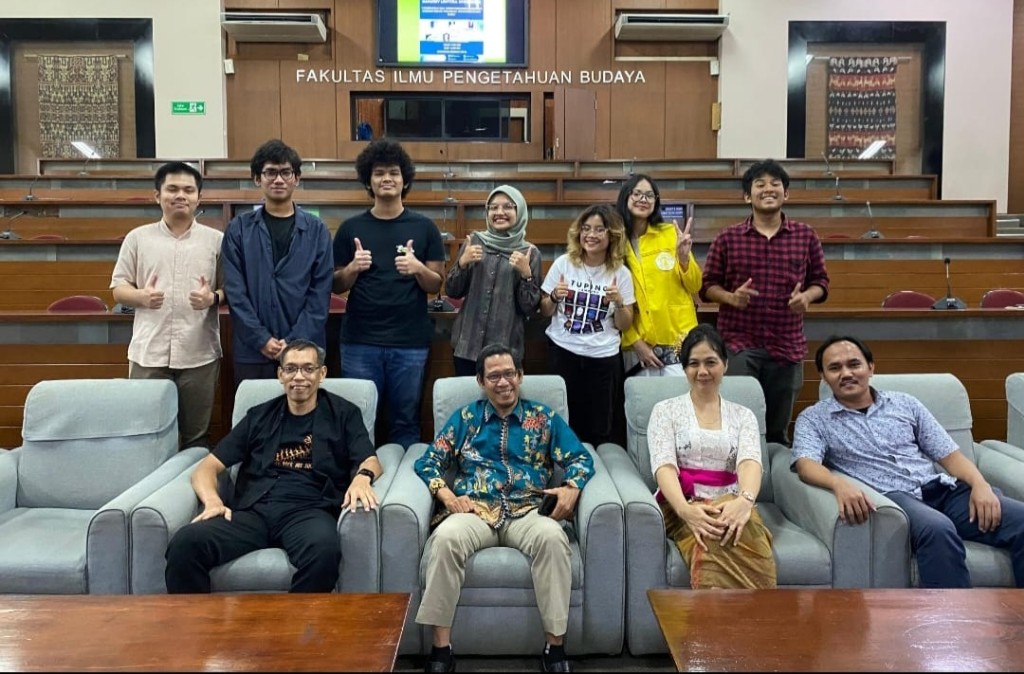
This article summarizes the interactions from a marathon discussion at Eco Tebet Park on August 10, 2025, and a seminar on May 9, 2025, at the University of Indonesia, supported by the Ministry of Culture, the Sanjeev Lentera Indonesia Foundation, and the Student Executive Board of the Faculty of Cultural Sciences, University of Indonesia.
The discussion took the theme: “Preserving and Internationalizing the Archipelago’s Cultural Heritage for World Peace.” The activity aimed to build discourse and actualize cultural potential and richness of Indonesia.
Dewi Uma, a cultural activist and Wariga or calendar system expert from Bali, served as the keynote speaker. Dewi Uma explained the local wisdom behind the Wariga calendar.
In the discussion, the Wariga expert Dewi Uma explained that Wariga is a calendar system that can guide human rights regarding nature. Wariga is a legacy of the ancestors of the Indonesian archipelago, explaining human rights as a microcosm in relation to the macrocosm.
“Human life truly has a blueprint, like the movement of the universe itself. Those who follow the roadmap will find it easier to reach and live in the world optimally. The cosmic Wariga calculation encourages humans to interact with nature through self-awareness through calculating the date, day, month and hour of birth.”
Regarding the universal values contained in Wariga, Dewi Uma explained that Wariga is universal because we are all subject to the interaction of the Galaxy, the sun and other planets in the universe. The important message of Wariga is for humans to live in harmony and adapt to changes in nature.
Wariga is a traditional astrological system originating from ancient Balinese civilization. The history on the origin of Wariga is inseparable from the history of Hindu culture and religion in the Indonesian archipelago and Bali.
According to Dewi Uma, Wariga is a teaching from ancient Hindu civilization brought to Bali by priests and brahmins from India in the first century AD. The Wariga astrological system was developed based on Hindu astronomical and astrological knowledge, then adapted to the local culture and environment in Bali.
Originally, Wariga was used by the Balinese people to determine the appropriate time for religious rituals and ceremonies, such as determining auspicious times for prayers, weddings, healing and other ceremonies.
Over time, Wariga was also used in daily life, such as determining the appropriate time for planting, harvesting and carrying out other activities. Wariga has become an integral part of Balinese culture and is used by the community to understand the universe and place of humanity within it.
Similarly, Wariga is influenced by the Saka calendar system used in Bali, which is based on the Hindu calendar. This Saka calendar system is used to determine the appropriate time for religious activities and daily life.
Over time, Wariga has become unique and distinctive to the Balinese people, with its emphasis on balance between humans and the universe. Wariga continues to be used by Balinese people today, and is an important part of Balinese culture and identity. The Wariga method can be applied in real life in several ways, including:
1) Determining the right time: Wariga can be used to determine the right time to carry out certain activities, such as:
• Determining the right time to start a new project
• Determining the right time to perform a ritual or ceremony
• Determining the right time to undergo treatment or therapy
2) Optimizing daily activities: Wariga can be used to optimize daily activities, as follows:
• Determining the right time to engage in physical activity or exercise
• Determining the right time to engage in mental or spiritual activities
3) Developing self-awareness: Wariga can be used to develop self-awareness, such as:
• Understanding the characteristics and traits of someone
• Identifying the strengths and weaknesses of someone
4) Developing interpersonal relationships: Wariga can be used to develop interpersonal relationships, such as:
• Understanding the characteristics and traits of others
• Identifying similarities and differences of others
5) Optimizing decisions: Wariga can be used to optimize decisions, such as:
• Determining the right time to make important decisions
• Identifying factors that influence decisions
When applying the Wariga method, it is important to remember that Wariga is a traditional astrological system having limitations and cannot be used as an absolute benchmark in real life. On that account, Wariga should be used as a complement and not a substitute for other scientifically proven approaches.
Wariga has a very close relationship with astrology because it is a traditional astrological system originating from Bali, Indonesia. Here are some connections between Wariga and astrology:
1) Use of star and planetary positions: Wariga uses star and planetary positions to determine the appropriate time for certain activities, such as determining auspicious times for planting, harvesting or performing religious rituals.
2) Influence of Hindu astrology: Wariga is influenced by Hindu astrology originating from India and utilizes Hindu astrological concepts such as the positions of planets, stars, and nakshatras (star constellations).
3) Emphasis on balance: Wariga emphasizes the importance of balance between humans and the universe, which is also an important concept in astrology.
4) Use of the calendar system: Wariga uses the Saka calendar system based on the Hindu calendar, which is also used in Hindu astrology.
5) Planetary Position Analysis: Wariga analyzes the positions of planets and stars to determine the best time to undertake certain activities, a technique also used in astrology.
In astrology, Wariga is used to understand the positions of planets and stars and how they influence human life. Wariga is also used to determine the best time to undertake certain activities, such as determining a good time to start a new project or perform a religious ritual.
Thus, Wariga and astrology are closely related, and Wariga can be considered a form of traditional astrology unique and distinctive to the Balinese people.
Wariga can be applied in the fields of economics and commerce in several ways, including:
1) Determining the right time to start a business: Wariga can be used to determine the right time to start a new business or launch a new product.
2) Optimizing investment decisions: Wariga can be used to optimize investment decisions by considering astrological factors influencing finances and business.
3) Identifying opportunities and risks: Wariga can be used to identify opportunities and risks in business and commerce, thus aiding in more informed decision-making.
4) Optimizing marketing strategies: Wariga can be used to optimize marketing strategies by considering astrological factors that influence consumer behavior.
5) Developing market analysis: Wariga can be used to develop market analysis by considering astrological factors influencing supply and demand.
When applying Wariga in economics and commerce, it is important to remember that Wariga is a traditional astrological system having limitations and cannot be used as an absolute benchmark for decision-making. Therefore, Wariga should be used as a complement and not a substitute for other scientifically proven approaches.
Some examples of Wariga applications in economics and commerce are:
• Determining the right time to conduct financial transactions
• Optimizing investment decisions in stocks or property
• Identifying new business opportunities based on astrological factors
• Developing effective marketing strategies based on consumer behavior
Wariga can be applied in agriculture in several ways, including:
1) Determining the right time to plant: Wariga can be used to determine the right time to plant certain crops based on the position of the stars and planets.
2) Optimizing plant care: Wariga can be used to optimize plant care, such as determining the right time for fertilizing, watering or pruning.
3) Identifying potential pest attacks: Wariga can be used to identify potential pest and disease attacks based on the position of the stars and planets.
4) Optimizing harvests: Wariga can be used to optimize harvests by determining the right time to harvest crops.
5) Developing sustainable agricultural strategies: Wariga can be used to develop sustainable agricultural strategies by considering astrological factors that affect crops and the environment.
When applying Wariga in agriculture, farmers can use knowledge of the positions of the stars and planets to make more informed decisions about planting times, plant care and harvesting.
Some examples of Wariga applications in agriculture are:
• Determining the right time to plant rice based on the position of certain stars
• Optimizing crop care by considering the positions of planets influencing soil fertility
• Identifying potential pest attacks based on the positions of stars and planets influencing pest populations
By using Wariga, farmers can increase crop yields and reduce the risk of crop failure. However, it is important to remember that Wariga is a traditional astrological system having limitations and cannot be used as an absolute benchmark for decision-making. On that account, Wariga should be used as a complement and not a substitute for other scientifically proven approaches.
According to Dewi Uma, Wariga, as a traditional Balinese calendar and astrological system, can have several benefits for public health, including:
1) Increasing awareness of the balance of nature: Wariga emphasizes the importance of balance between humans and nature. By understanding the principles of Wariga, people can become more aware of the importance of maintaining the balance of nature and the environment.
2) Optimizing timing for activities: Wariga can help people determine the right time to carry out certain activities, such as healing, rituals, or other activities, thereby increasing effectiveness and reducing risks.
3) Reducing stress and improving mental well-being: By understanding our characteristics and traits based on Wariga, we can better understand ourselves and manage stress.
4) Raising awareness of the importance of ritual and spirituality: Wariga emphasizes the importance of ritual and spirituality in daily life. By understanding Wariga principles, people can become more aware of the importance of maintaining spiritual and mental balance.
5) Developing a holistic approach to health: Wariga can help people understand the importance of a holistic approach to health, encompassing physical, mental, and spiritual aspects.
However, it is important to remember that Wariga is a traditional astrological system having limitations and cannot be used as an absolute benchmark for public health. Therefore, Wariga should be used as a complement to and not a substitute for scientifically proven medical approaches. In conclusion, Wariga calculations are crucial as a comparative guide in deciding the direction of our daily life.
*) Putu Suasta, Alumni of Gadjah Mada University (UGM) and Cornell University, and also a member of the Bumi Insani Foundation

Baca Artikel Menarik Lainnya : BKD Ajak Pers Lakukan Pengawasan