Mahābhārata and Ramayana Serve as Liberation Spirituality
Admin - atnews
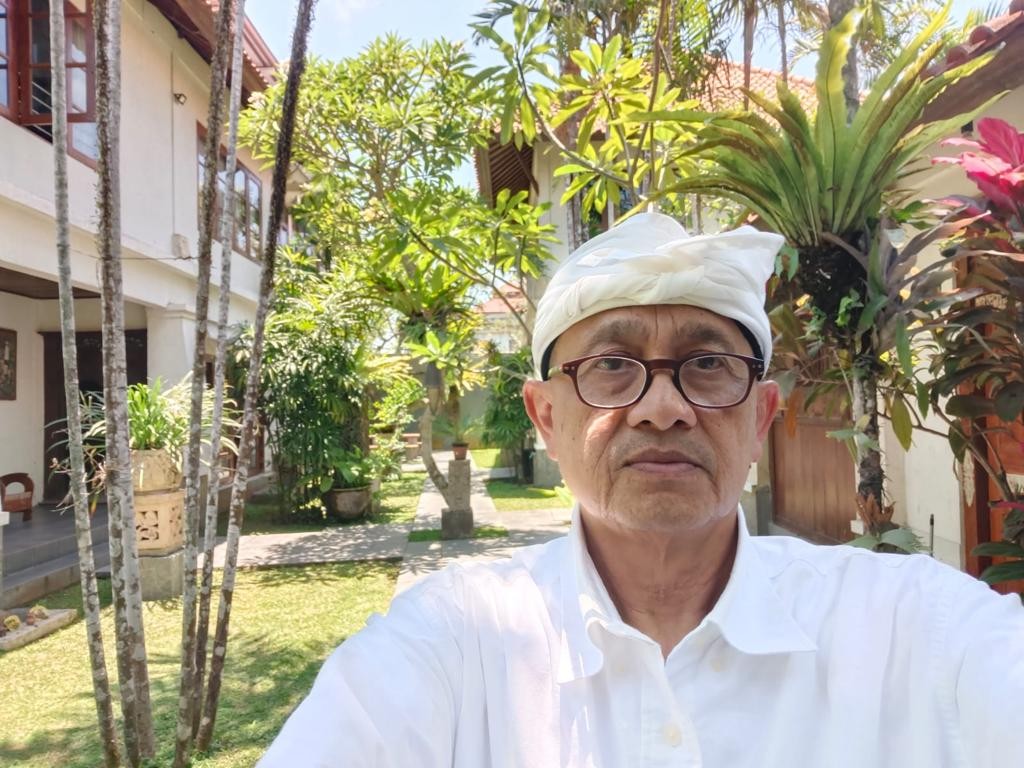
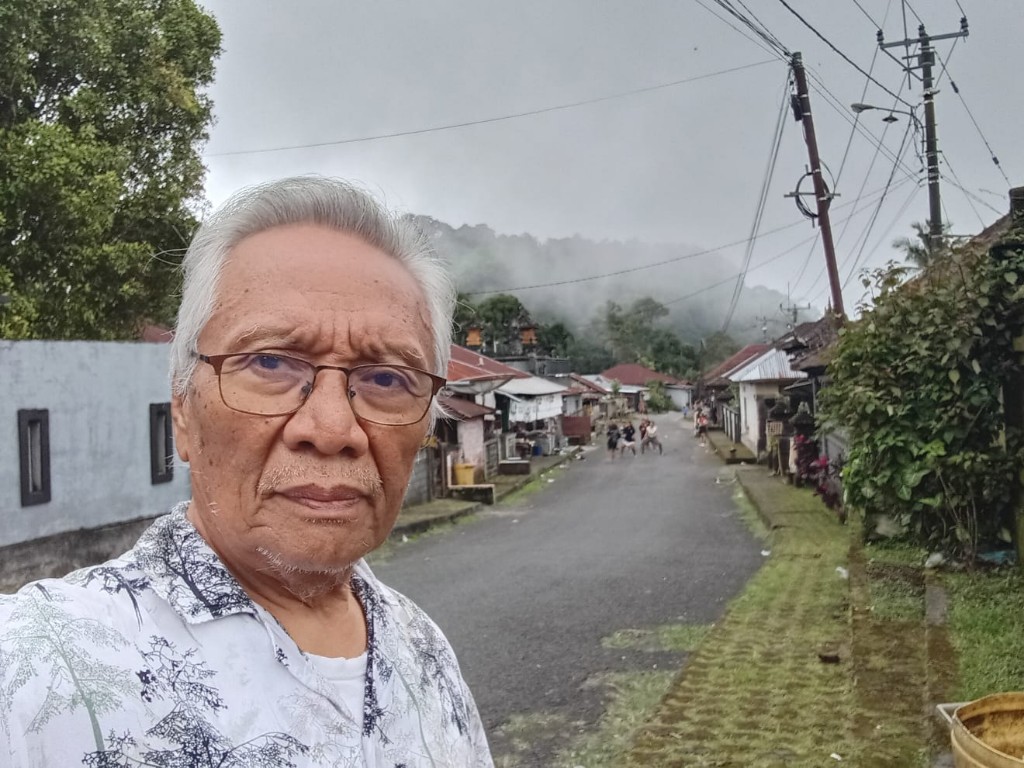
Jakarta (Atnews) - Humanist Putu Suasta revealed the popularity of Itihāsa Mahābhārata and Ramayana which had an influence on the life of people. Itihāsa is part of the Vedic scriptures which means “real occurrence.” The stories in the Itihāsa book are spread throughout mainland India to Southeast Asia.
During the kingdom era in Indonesia (Nusantara), the two Itihāsa books were translated into Old Javanese, and even adapted to suit local culture. Similarly, the stories in the Itihāsa book were made into puppet performances and composed into kakawin (narrative poems in Old Javanese).
Apart from that, the Mahābhārata and Ramayana developed and provided inspiration for various forms of culture and artistic expression, especially in Java and Bali, ranging from sculpture and relief in temples, dance, painting to performing arts such as shadow puppet and human puppet.
Recently, television broadcasts in Indonesia and including in Bali have aired Mahābhārata and Ramayana series.
In the world of Indonesian popular literature, the Mahābhārata story is also presented in comic form so that it is increasingly known to the lay public. One of the famous works is that of R.A. Kosasih.
The Mahābhārata book is the work of Rishi Krisna Dwaipayana Vyasa or Bagavan Vyasa. Rishi Vyasa is the son of Satyavati Devi with Rishi Parashar who was born on a small island “Krishna Dvipa” in the middle of the Yamuna Sacred River.
The greatness of Rishi Vyasa, who was the most learned, mastered all the teachings of the Vedas is undeniable, it is even mentioned in Sarasamuccaya, Bhumika 1.
The story was originally written in Sanskrit and then copied in various languages, especially following the development of Hindu civilization in the past in Asia, including Southeast Asia, namely Indonesia.
What is more interesting is that the Mahabharata is also recognized as one of the longest stories in the world, having more than 100,000 slokas, around 1.8 million words. Moreover, its length is estimated to be four times longer than the Ramayana.
In Indonesia, copies of various parts of the Mahabharata, such as Adi Parva, Virata Parva, Bhishma Parva and perhaps also several other parvas, are known to have been composed in Kawi (Old Javanese) prose since the end of the 10th century AD during the reign of king Dharmawangsa Teguh (991 -1016 AD) from Kediri. Because of its nature, this form of prose is also known as parva literature.
What was even more popular in later times was the composition of the story in the form of kakawin, namely ancient poetical narrative in the Indian meter of Old Javanese language. One of the famous ones is kakawin of ArjunaVivaha (the marriage of Arjuna) composed by Mpu Kanwa.
This work, which is thought to have been written between 1028-1035 AD (Zoetmulder, 1984), was dedicated to King Airlangga of the Medang Kamulan kingdom, son-in-law of King Dharmawangsa.
Another famous kakawin literary work is the Bharatayuddha, which was composed by Mpu Sedah and later on completed by Mpu Panuluh (Panaluh). This kakawin was dedicated to King Jayabhaya (1135-1157 AD), written at around the end of the reign of the king of Daha (Kediri).
Besides, Mpu Panuluh also wrote kakawin entitled Hariwangśa during the Jayabaya era, and is thought to have composed Gaţotkacāśraya during the time of King Kertajaya (1194-1222 AD) from Kediri.
Several other kakawin derivatives of the Mahabharata which are also important to mention include Kŗşņāyana (the work of Mpu Triguna) and Bhomāntaka (unknown author), both from the Kediri kingdom era, and Pārthayajña (Mpu Tanakung) at the end of the Majapahit era. Copies of ancient manuscripts written on palm-leaf manuscripts are also known to be stored in Bali.
In more recent times, the Bharatayuddha book was also copied by the poet of Surakarta Yasadipura Palace into modern Javanese around the 18th century. It included in Indonesian popular literature where the Mahabharata story is also presented in comic form, one of the most famous ones is the work of R.A. Kosasih.
Meanwhile, the Ramayana Book compiled by Rishi Valmiki consists of 24,000 slokas and has seven parts called Sapta Kanda.
The Ramayana is also found in Javanese literature in the form of the kakawin of Ramayana, including in Malay there is also the Rama chronicle whose content is different from the kakawin of Ramayana in Old Javanese and Balinese, namely shadow puppet and ballet performances.
Several chapters and scenes in the Ramayana are expressed in the form of paintings and sculptures in Hindu-style architecture. The Ramayana epic has also been incorporated into puppetry culture in the archipelago, such as in Java and Bali.
Apart from that, in several countries (such as Thailand, Cambodia, Vietnam, Laos, the Philippines, et cetera), the Ramayana epic is presented as an artistic performance.
It is estimated that during the era of the ancient Mataram kingdom in the 9th century. The language in kakawin of Rāmâyaṇa, there were also temple reliefs and drama stories. Relief of Prambanan Temple shows Sita is being kidnapped by King Ravana who is riding a winged-giant plane, while Jatayu on the top left tries to lend a hand to Sita
This also inspired President Soekarno, who was fascinated by the Ramayana, especially with one of the characters, Jatayu, the son of Aruna and nephew of Garuda.
Soekarno glorified the figure in the form of the Garuda, the mythical golden eagle. So, based on the inspiration of Soekarno, the first airline company of Indonesia was named Garuda. It also includes the national emblem of Indonesia, Garuda, which has even become a source of pride for the Indonesian people.
“There are lots of relics from the Mahābhārata and Ramayana stories in Indonesia, especially in Bali which is a cultural heritage having inspiration and guidance and inspiring values,” said Suasta, who is also an alumni of Gadjah Mada University and Cornell University on Shivaratri Day in Jakarta, Tuesday (Jan 9).
When visiting the Indonesian capital, Jakarta, people are familiar with the Arjuna Vivaha statue from the Mahābhārata story, known as the horse statue, where the chariot of Arjuna with eight horses is driven by Krishna. It is precisely located on Jalan Medan Merdeka Barat, Central Jakarta. The statue was built around 1987, after the state visit of President Soeharto to Turkey.
Meanwhile, Prambanan Temple also has reliefs telling the story about the Ramayana and Krishnayana. Likewise, the Ramayana relief at Penataran Temple located on the southwest slope of Mount Kelud, in Penataran Village, Nglegok Subdistrict, Blitar District, East Java.
Apart from that, when visiting the Island of the Gods, visitors will be ablet to find many magnificent statues taken from the Mahābhārata and Ramayana epic.
In addition, in Bali visitors will also see Garuda Wisnu Kencana (GWK) statue, known to the world, which is 121 meters high and 60 meters wide. The statue was inaugurated by President Joko Widodo, located on Jalan Raya Uluwatu, Ungasan, South Kuta Subdistrict. Badung District, Bali. It is the work by the famous Balinese artist, I Nyoman Nuarta. Moreover, it was selected as one of the venues for the G20 Summit 2022
There is also the Knight Gatot Kaca statue by an artist named I Wayan Winten located around Ngurah Rai International Airport, Bali, built in 1993. Then, the Nakula-Sahadeva statue lies on Jalan Uluwatu II, Badung, Jimbaran. It also includes the Dewa Ruci statue built in 1996 in the Kuta Roundabout, Bali.
Likewise, it is also discovered the Krishna-Arjuna Statue located in the Water Blow tourist area, Peninsula Island, Nusa Dua. The Battle of Kumbakarna Statue on Jalan Eka Karya Botanical Garden, Candikuning, Baturiti Subdistrict, Tabanan, Bali; Rama Shita Garden on Jalan Raya Denpasar - Gilimanuk; as well as Rama and Hanoman Statue on Jalan Raya Sempidi.
Apart from that, the Titi Banda Statue featuring Rama on the Jalan Bypass Ngurah Rai, Kesiman Kertalangu, Denpasar, Bali. The Catur Muka statue, created by artist I Gusti Nyoman Lempad, has become one of the landmarks of Denpasar City.
The popularity of this story has also become the name of many businesses, name of people and the names of roads.
Suasta has also visited the Angkor Wat Temple in Cambodia which is a Hindu temple covering an area of 100 square km, the largest temple on planet Earth which was built 1000 years ago.
The reliefs of the Mahābhārata and Ramayana are carved on a complex and sophisticated new wall 200 meters long. All the stories and moral messages have been moral lessons for 1000 years in all Asian kingdoms, even today.
Previously, his party had specially visited the Jyotisar holy place, Kurukshetra in the state of Haryana, North India. The vast Kurukshetra complex surrounded by lakes is known as the site of the great war between the Kauravas and Pandavas in the journey history of Mahabharata.
Kurukshetra, also called Dharmakshetra, is located in Hastinapur north of the modern city of New Delhi today. In the past, this venue was a holy place because it was often used by Rishis, Kshatriyas for meditation, and reportedly even by the gods.
The war took place for 18 days, where the battle was won by the Pandavas. Similarly, Kurukshetra was also the venue where Krishna revealed the Bhagavad Gita to Arjuna in the middle of the battlefield.
Visitors can see Jyotisar, the venue where Krishna revealed the Bhagavad Gita to Arjuna. the event occurred more than 5000 years ago.
Pilgrimage places that can be found in Kurukshetra are the Brahma Sarovar which is used to celebrate Somavati Amavasya (a solar eclipse which is considered sacred), Sannihit Sarovar, Krishna Museum (has several historical artifacts and paintings about the war in the Mahabharata), Science Museum, Bhishma Kund in Naraktari (venue where Arjuna shot the earth to emit water to quench the thirst of Bhishma) as well as Saraswati Forest Reserve. (GAB/ART/001)

Baca Artikel Menarik Lainnya : Amlapura Terpapar Hujan Abu Erupsi Gunung Agung