Odisha Parab 2026 in Bali; Indian President Droupadi Inaugurates Bali Jatra on the Banks of the Mahanadi River
Admin 2 - atnews
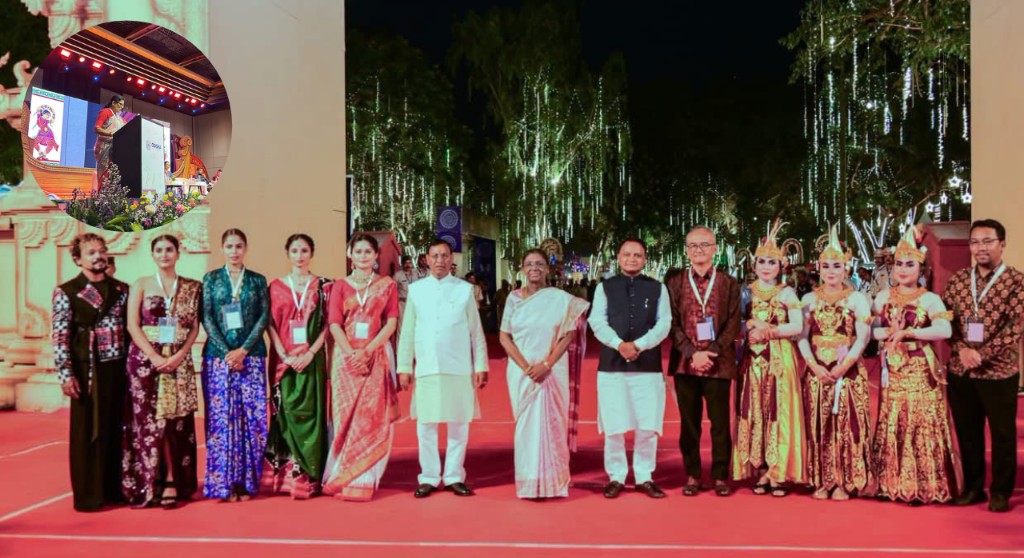
Denpasar (Atnews) - The Deputy Chief Minister of the Indian state of Odisha, Smt. Pravati Parida, emphasized that the historical ties between Bali and Odisha are not merely a relic of the past, but a civilizational legacy that must be translated into strategic and cross-sectoral partnerships in the modern era.
Through the grand event Odisha Parab 2026, held at the Bali Beach Convention Center (BBCC) at The Meru Sanur, Denpasar, on November 24–25, 2026, she advocates for the strengthening of concrete cooperation between the two regions—encompassing cultural exchange, tourism collaboration, trade, traditional handicrafts, and institutional linkages.
This historic event was attended by the Deputy Chief Minister of Odisha, Smt. Pravati Parida, accompanied by the Minister of State for the Odia Language, Literature, and Culture Department, Shri Suryabanshi Suraj; Deputy Chief of Mission at the Embassy of India in Indonesia, Shri Bijay Selvaraj; and a high-level delegate from the Government of Odisha.
Also present were I Gusti Arya Wedakarna, a member of the Regional Representative Council (DPD RI) for the Bali constituency; Dr. Somvir, representing the Speaker of the Bali House of Representatives (DPRD) on behalf of the Democrat-NasDem faction; Ida Dalem Semara Putra, a senior figure of Klungkung Grand Palace; Ida Cokorda Mengwi XIII, senior figure of Mengwi Grand Palace (a former DPD RI member for Bali and a former Regent of Badung); Padma Shri awardees Ida Rsi Putra Manuaba and Prof. Dr. I Wayan Dibia; as well as various community leaders, entrepreneurs, academics, and members of the Balinese public.
Academic Prof. Gede Sutarya; Dr. Wayan Sayoga, Chairman of Prajaniti Bali; Putu Suasta, a global traveler and alumnus of both Gadjah Mada University (UGM) and Cornell University; Prof. Dr. Ir. I Gusti Ngurah Nitya Shantiarsa, MT; and Agus Maha Usadha, Chairman of NCPI Bali were also present.
In her remarks, Smt. Pravati Parida noted that the bond between Odisha and Bali has existed for centuries, forged by the ancient seafarers and merchants of Odisha—known as Sadhabas—who sailed from the Kalinga coast in Boita (vessels) toward Bali, Java, and Sumatra.
This spirit of maritime brotherhood was rekindled through the Boita Bandana ceremony and the launching of miniature boats at Sanur Beach, coinciding with the sacred day of Kartik Purnima.
This event took place simultaneously with the inauguration of the Bali Jatra festival on the banks of the Mahanadi River in Cuttack, attended by the President of India, Smt. Droupadi Murmu, and the Chief Minister of Odisha, Shri Mohan Charan Majhi.
“Standing on this historic island today, we realize that the oceans do not separate civilizations; rather, they unite hearts and cultures. It is truly a source of pride to see our shared maritime heritage celebrated on both sides of the ocean at the same time.
Today, we are renewing the bridge of brotherhood built by our ancestors—through culture, tourism, and entrepreneurship—as we move toward the grand vision of Viksit Bharat (Developed India) for 2036 and 2047,” said Smt. Pravati Parida.
Beyond strengthening historical diplomacy, the Odisha Parab 2026 event served as an international platform for women entrepreneurs from the Mission Shakti self-help groups.
They showcased Pattachitra paintings from Puri, handwoven Kotpad textiles from Koraput, and intricate crafts made from Saba grass from Mayurbhanj.
The exhibition, which showcases a variety of traditional Odia culinary offerings as well as premier destinations—such as the Konark Sun Temple, the spiritual precinct of Shri Jagannath in Puri, Lake Chilika, Similipal National Park, and the Buddhist heritage sites of Dhauli and Udayagiri—is expected to inspire tourists from Bali and the rest of Indonesia to visit Odisha.
“Our women are transforming traditional skills into sustainable livelihoods and independent enterprises. This is the true embodiment of Nari Shakti (the empowerment of women): moving from participation to leadership, from skill-based proficiency to entrepreneurship, and from local identity to global recognition,” she asserted.
Echoing this sentiment, the Minister of State for the Odia Language, Literature, and Culture Department, Shri Suryabanshi Suraj, highlighted the strong linguistic commonalities between the Odia and Balinese languages.
This is reflected in everyday vocabulary, with shared terms such as aksara (letters), manusya (human), guru (teacher), raja (king), maharaja (emperor), putra (son), putri (daughter), mitra (partner), desa (village), and duta (envoy).
According to him, these linguistic and traditional parallels serve as clear evidence of a civilizational bond spanning thousands of years—a connection upheld by the Odia and Indian diaspora in Bali through the preservation of the classical Odissi dance and the celebration of cultural festivals across generations.
“The Odia and Indian diaspora serve as our most valuable cultural bridges to the rest of the world; wherever you reside, you represent the identity of Odisha and India through your language, art, music, classical Odissi dance, and the celebration of festivals, sharing them with people of other nations.
I encourage parents and the community to continue passing down these noble languages and traditions to the younger generation, ensuring that our cultural roots remain vibrant,” he concluded.
Meanwhile, the President of India, Smt. Droupadi Murmu, inaugurated the Bali Jatra Festival 2026 in Cuttack, Odisha.Tuesday (Nov 24). On that occasion, the President stated that Bali Jatra is a unique festival that celebrates the glorious history of Odisha.
A history of maritime trade evolved into a tradition, and such a tradition has since become a festival. This reflects the creativity and historical perspective of the people of Odisha. The President also noted that merchants from Odisha used to travel to distant lands for trade and business.
Through trade, they achieved many significant milestones for the nation. They discovered new maritime routes and strengthened international relations, while also serving as conduits for cultural exchange.
The President suggested that the historical ties between Odisha and Bali could be transformed into modern commercial and cultural cooperation. Likewise, she expressed her pleasure in seeing cultural groups from Indonesia participating in the Bali Jatra.
The festival, held in Odisha, spanned two days and showcased the traditional dances, music, textiles, handicrafts, and cuisine of the state.
Droupadi Murmu expressed her confidence that such cultural exchanges would further strengthen the historical bonds between India and Indonesia.
“While it is good to take pride in the glories of the past and celebrate our festivals, we must also draw inspiration from the past to shape the present and illuminate the future.
Our younger generation, in particular, has much to learn from the courage and competence of our merchants,” she said.
The President stated that building a Viksit Bharat (a Developed India) is a national objective. The standing of India on the international stage has grown.
Despite turmoil in various parts of the world and instability in the global economy, the economy of India has remained robust—a promising indicator on our journey toward a Viksit Bharat.
The President also noted with satisfaction that Odisha is emerging as an industrial hub, attracting an increasing number of investors. Entrepreneurs, artisans, weavers, and the younger generation in Odisha are strengthening the economy of the state through their skills and entrepreneurial spirit.
“Their growing contributions are a positive sign for progress toward realizing the vision of a Viksit Odisha (Developed Odisha),” she stated.
In the meantime, Indonesia proudly participated in the Bali Jatra 2026 in Cuttack, Odisha, as an official Partner Country.
The festival was inaugurated by the President of India, Droupadi Murmu. Representing Indonesia, Yudho Sasongko—Deputy Chief of Mission and Person in Charge of Affairs ad interim at the Embassy of the Republic of Indonesia in New Delhi—was honored to be present on stage during the opening ceremony.
Held annually on the banks of the Mahanadi River, Bali Jatra (literally, Voyage to Bali) commemorates the courage of the Sadhaba mariners from ancient Kalinga, who sailed toward Sumatra, Java, and Bali, bringing with them trade, ideas, and friendship.
“Thousands of years later, these ancient maritime routes continue to connect our peoples. As a Partner Country, Indonesia celebrates this shared heritage and looks forward to closer cooperation with Odisha in the fields of culture, tourism, trade, and people-to-people ties,” he remarked.
Furthermore, Yudho Sasongko, accompanied by the Embassy team and the Honorary Consul of Indonesia in Kolkata, met with Ambassador Lalit Mansingh, Chairman of the Kalinga International Foundation (KIF), along with its members.
KIF is a think tank focused on international security, trade, foreign policy, and regional cooperation. Its membership includes business leaders, historians, diplomats, and academics.
This second coordination meeting between the Embassy and KIF served as a follow-up to previous discussions. Both sides also explored new ideas for cooperation in the fields of trade, investment, as well as shared history and culture.
Previously, Yudho Sasongko—accompanied by a team from the Embassy of the Republic of Indonesia in New Delhi and the Honorary Consul of Indonesia in Kolkata—met with members of the Advisory Council of the World Trade Centre (WTC) Bhubaneswar.
The two parties exchanged ideas on ways to strengthen cooperation in the economic, trade, and tourism sectors between Indonesia and the state of Odisha. Odisha, known in the past as Kalinga, has maintained trade and cultural ties with the Indonesian archipelago for centuries.
“This heritage serves as a strong foundation for elevating the cooperation between Indonesia and Odisha to a higher level,” he concluded. (GAB/YOG/WIG)
Baca Artikel Menarik Lainnya : Gubernur Koster Sebut Akulturasi Budaya Bali dan Tiongkok Sudah Turun Temurun