Bali Jatra: The Future of Bali-Odisha Relations
Admin 2 - atnews
By Prof. I Gede Sutarya
November 24, 2026, marks Purnama Kartika (the full moon of the month of Kartika) according to the global Hindu calendar—a date falling one month apart from the Balinese calendar. On this Purnama Kartika, the people of Odisha in Eastern India commemorate Bali Jatra, a celebration honoring historical voyages to Bali. In Odisha, the commemoration is led by the President of India, Draupadi Murmu.
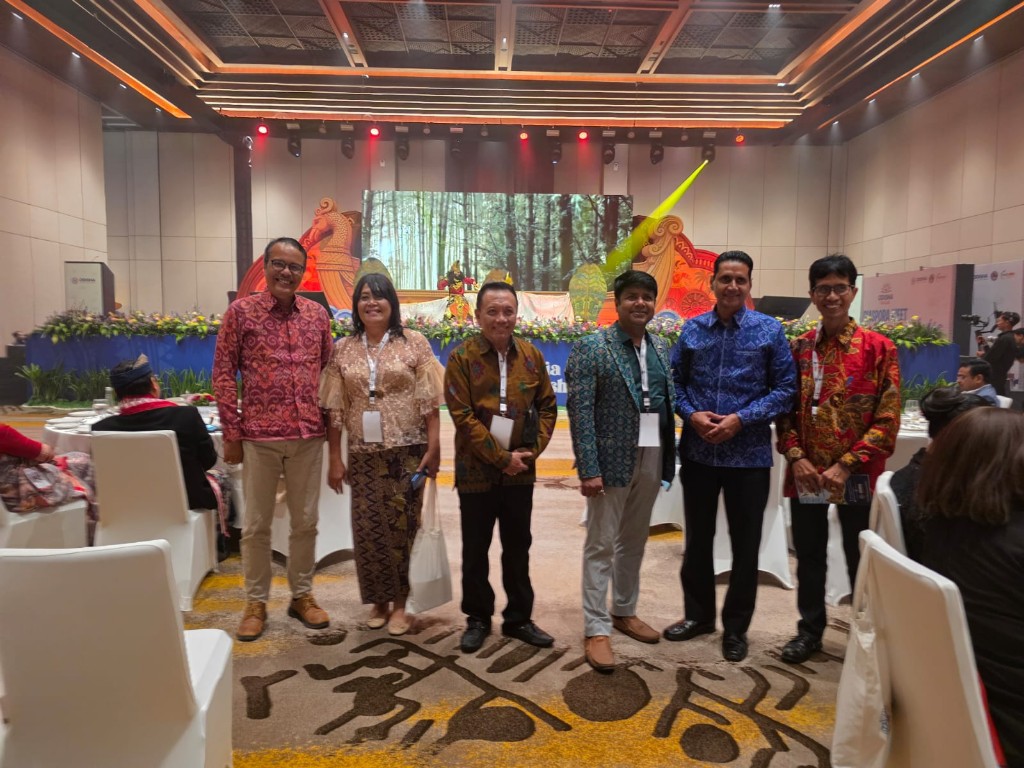
Meanwhile, in Bali, the government of Odisha is hosting an exhibition titled Odisha Parab at The Meru, Bali Beach, Sanur, on November 24–25, 2026. In Bali, Purnama Kartika is traditionally observed as a sacred ceremony at the Padmatiga shrine in the Besakih Temple complex.
Consequently, Bali Jatra shares a meaningful connection with Balinese traditions, particularly within religious rituals. The Majajiwan texts—recited during the Mapeselang ceremony at Besakih—recount that the earliest ancestors to arrive in Bali came from Keling (Odisha), followed by those from the Singasari and Majapahit kingdoms. These ancestors are said to have left behind a legacy of great value to the Balinese people.
The Markandeya Purana records that the first holy figure to arrive in Bali was the sage Rishi Markandeya. He brought with him the Aga people, who became the first inhabitants of Bali.
Rishi Markandeya taught the early settler various agricultural skills, including the management of irrigation channels and the establishment of a water-management organization known as Subak.
Furthermore, he placed the Pancadatu (five sacred metals) at Besakih, serving as the foundational cornerstone for the development of the temple complex.
This historical connection persists today within major Balinese ritual traditions, which must be accompanied by the Topeng Sidakarya (Sidakarya mask). This mask represents the Brahmana Keling—a sage from Keling who was eagerly waited for ceremonies at Besakih but never arrived; in his absence, the Balinese people created this mask to serve as a symbolic representation of the Brahmana.
The Brahmana Keling is a priest who provides the formal validation—known as Sidakarya—that a ceremony at Besakih has been successfully concluded.
In certain Balinese regions, such as Tenganan, the community is required to use a specific type of woven fabric known as Tenun Pageringsingan. The techniques and motifs used in this weaving are identical to those found in the weaving traditions of Odisha, India; specifically, the Pageringsingan fabric bears a striking resemblance to an Odishan textile style called Bandhakala. The requirement to use this fabric in their rituals serves as a living memory of a historical connection.
This memory is also woven into Balinese worship traditions, which share links with the Surya (Sun) Temple—or Konark Temple—in Odisha.
In Bali, acts of worship typically begin with the veneration of Dewa Surya (the God of the Sun), a practice that contrasts with the more common tradition in India, where worship usually commences with Lord Ganesha.
This focus on Surya reflects a theological connection between Bali and Odisha, as both regions—particularly in ancient times—placed a strong emphasis on the worship of the Sun.
From an archaeological perspective, Professor Ardika has identified similarities between pottery found along the northern coast of Bali and pottery discovered at Arikamedu in Odisha.
This suggests that the relationship between Bali and Odisha dates back to prehistoric times. Balinese inscriptions, such as the Tengkulak A inscription (1023 CE), mention Katyagan Amarawati; Amarawati was a city in Odisha, India, that housed an institution of higher learning.
Furthermore, the cave hermitages found along the Tukad Pakerisan river in Bali have been linked to similar hermitages in Udayagiri, Odisha.
Archaeological findings, historical records, mythology, and ritual traditions all point to a close relationship between Bali and Odisha, spanning from the early centuries of the Common Era until approximately the 12th century CE.
Following this period, international relations of Bali came under the control of Java; all incoming vessels were required to dock in Java before proceeding to Bali—a consequence of Javanese dominance over the island.
Perhaps this is what hindered the journey of Brahmana Keling, preventing him from reaching Bali—a detail recounted in the Sidakarya play.
These records indicate that the relationship between Bali and Odisha was highly intensive for a thousand years. The early period (1–1023 CE) was characterized by trade, while the years between 1000 and 1200 saw young Balinese individuals traveling to study at educational centers in Odisha, India.
After 1200, this relationship became dominated by Java, leaving Bali dependent upon it. Consequently, most of the priests who arrived in Bali were from Java, which fostered a deep reliance on Java among the Balinese people.
Today, Bali is open to the international community. Direct flights from India to Bali are now available, facilitating stronger ties between the two regions. As a result, this long-standing connection can be revitalized.
Its process has already begun within the tourism sector; a significant number of Indian tourists—including some from Odisha—now visit Bali, with India ranking among the top five sources of international visitors to the island.
This trend has further potential for growth, as Indian travelers often appreciate the cultural commonalities that align with the attractions Bali offers. Thus, a “people-to-people” connection between the two regions has been established through tourism.
This tourism-based relationship serves as a foundation for broader economic, social, and cultural ties between the two regions. The population of Odisha is projected to reach approximately 48 million by 2026.
This figure is ten times the population of Bali, representing a significant market for Balinese products. Odisha imports large quantities of palm oil from Indonesia to meet its domestic demand. Other sectors may also present opportunities for Bali. Consequently, there is great potential to revitalize the trade relations that existed in the past.
*) Prof. Dr. I Gede Sutarya, SST.Par., M.Ag., is a Professor of Spiritual and Religious Tourism Planning and Development at the I Gusti Bagus Sugriwa State Hindu University, Denpasar
Baca Artikel Menarik Lainnya : Presiden Jokowi Minta Edukasi Kebencanaan Segera Dilakukan