Penglipuran and a New Path for Bali’s Tourism Villages: From Sustainable to Regenerative
Admin 2 - atnews
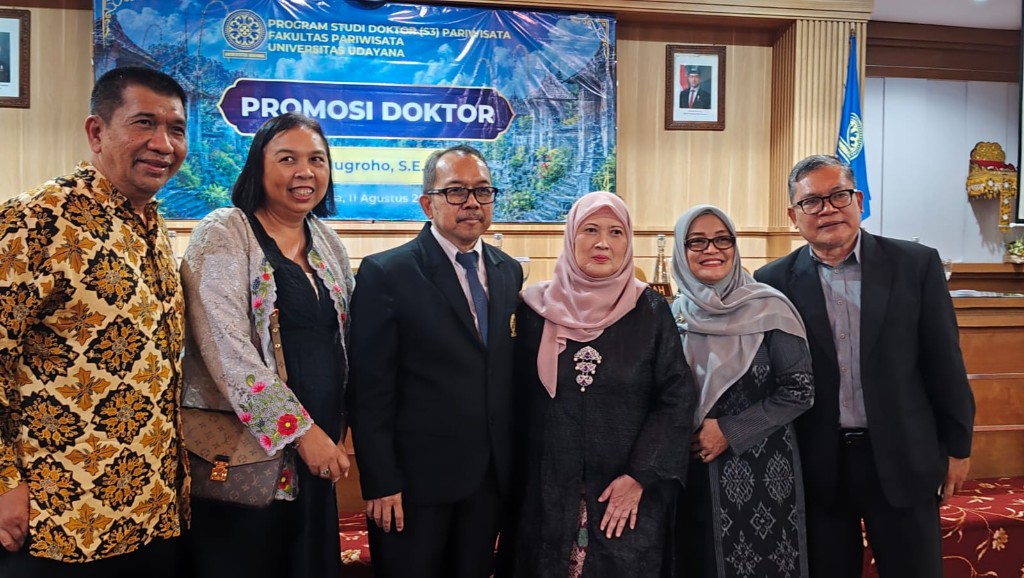
by Dr. Trisno Nugroho, S.E., MBA
Bali has long been admired by the world for its natural beauty, rich culture, warm hospitality, and living traditions. Yet, behind this global admiration lies a serious question: how can Bali continue to welcome the world without losing the very soul that makes it special?
For decades, tourism has brought significant economic benefits to Bali. It has created jobs, supported local businesses, strengthened creative industries, and introduced Balinese culture to the world.
However, tourism has also brought new pressures: waste, traffic congestion, land conversion, water stress, cultural commodification, and social tension in several destinations.
This is why Bali needs a new way of thinking about tourism. It is no longer enough to ask how many tourists come, how many hotel rooms are occupied, or how much revenue is generated. The more important question today is: does tourism make Bali better?
This is the essence of regenerative tourism.
Sustainable tourism has taught us to reduce negative impacts and maintain balance between economic, social, cultural, and environmental interests.
That is important. But regenerative tourism goes further. It asks tourism not only to reduce harm, but also to restore, strengthen, and improve the quality of destinations.
In simple terms, sustainable tourism asks: how can tourism avoid damaging a place?
Regenerative tourism asks: how can tourism make a place healthier, stronger, and more alive?
This question is highly relevant for Desa Wisata Penglipuran in Bangli Regency, Bali. Penglipuran is one of Bali’s most iconic tourism villages.
It is known for its cleanliness, traditional spatial layout, bamboo forest, traditional houses, strong customary values, and community participation.
For many visitors, Penglipuran represents the beauty of a Balinese village that has successfully maintained its identity while welcoming tourism.
But success also brings new challenges.
As Penglipuran becomes more famous, visitor numbers increase. The village becomes more crowded. Waste needs to be managed more seriously. The bamboo forest requires better interpretation and ecological care.
Walking paths and green areas face greater pressure. Traditional values must be protected from excessive commercialization. Most importantly, the local community must remain the main owner and decision-maker of the village’s future.
Penglipuran teaches us an important lesson: a successful tourism village should not stop at being successful. It must continue to renew itself.
From my research on Penglipuran, I found that community knowledge and understanding play an important role in encouraging community engagement. People who only know about tourism may not necessarily become actively involved.
But people who truly understand the meaning, benefits, risks, and responsibilities of tourism are more likely to participate in protecting and developing their village.
This is a key lesson for the future of tourism villages. Tourism development should not rely only on promotion, facilities, and attractions. It must also build shared understanding among local communities.
A tourism village should not be treated merely as a tourism product. It is first and foremost a living space for its people.
Community engagement is therefore crucial. When local people are meaningfully involved, tourism can strengthen the local economy, empower communities, support micro and small enterprises, open space for young people, enhance social cohesion, and create more meaningful visitor experiences.
However, there is also an important note. Community engagement does not automatically lead to environmental restoration.
Caring for the environment requires clear systems, measurable indicators, continuous programs, and strong governance.
Waste management, bamboo forest conservation, visitor carrying capacity, water management, and ecological monitoring cannot rely only on goodwill. They require structure, commitment, and consistency.
This is where regenerative tourism becomes highly relevant.
To explain this idea in a simple way, I developed the REGENESIS Model, which can also be understood as the 6M Model in Indonesian terms.
The first is Memulihkan — to restore. Tourism should help restore the environment, culture, and social life of a destination. If certain areas are damaged by visitor pressure, they must be restored. If cultural values begin to weaken, they must be strengthened again.
The second is Menjaga daya dukung tempat — to protect the carrying capacity of place. Every village, beach, forest, temple, heritage area, and city has limits.
Good tourism respects those limits. Bali should not be forced to carry more tourism pressure than its water, waste systems, roads, public spaces, culture, and communities can handle.
The third is Memberi manfaat lebih besar — to create greater positive benefits. Tourism should generate benefits that are greater than the burdens it creates.
Tourism revenue must flow back to local communities, culture, the environment, and the continuous improvement of the destination.
The fourth is Menguatkan budaya dan masyarakat — to strengthen culture and community. Balinese culture should not become merely a tourism performance.
Customary values, rituals, traditional architecture, local cuisine, arts, language, and the philosophy of Tri Hita Karana must become stronger because of tourism, not weaker because of it.
The fifth is Menyatukan para pihak — to integrate all stakeholders. Regenerative tourism cannot be achieved by one actor alone.
Traditional villages, destination managers, government, businesses, academics, local communities, young people, and visitors must work together.
The sixth is Membangun sistem yang terus belajar — to build a learning system.
Destinations must continuously evaluate themselves. How much waste is produced? Do local people feel the benefits? Do visitors understand local values? Is the environment improving? Are economic benefits distributed fairly? Without data and evaluation, tourism can easily become trapped in routine promotion and short-term growth.
The REGENESIS Model was born from the case of Penglipuran, but its lessons are relevant for many tourism villages in Bali and Indonesia.
Of course, every village should not simply copy Penglipuran. Coastal villages face different challenges from mountain villages.
Agricultural villages are different from cultural villages. Heritage areas in cities are different from traditional villages. But the principle is the same: tourism should make the place better.
In a coastal village, regenerative tourism may mean cleaning beaches, restoring coral reefs, reducing marine waste, and strengthening the livelihoods of fishermen.
In an agricultural village, it may mean protecting rice fields, water sources, local seeds, and the dignity of farmers. In a cultural village, it may mean strengthening rituals, traditional architecture, arts, language, and youth participation.
In an urban heritage area, it may mean revitalizing historic buildings, public spaces, small businesses, and local communities.
For Bali, this approach is urgent. Bali is already a world-class destination. But being world-famous is not enough. Bali must remain a living cultural landscape, a home for its people, and an island whose nature is protected with real commitment.
The future of Bali tourism should not be measured only by the number of visitors. It should be measured by stronger traditional villages, healthier environments, more prosperous local communities, more responsible visitors, and a deeper respect for Balinese culture.
Penglipuran gives us an important message: popularity is not the final goal. Popularity must become energy to protect the village, restore the environment, strengthen culture, and empower the community.
This is the new path of regenerative tourism. Bali does not only need to be sustainable. Bali needs to regenerate.
Because the best tourism is not merely the tourism that brings visitors to a place, but the tourism that leaves the place, its people, its culture, and its nature better after the visitors have gone.
*) Dr. Trisno Nugroho, S.E., MBA. is a Doctor of Tourism from Udayana University. His dissertation is entitled Regenerative Tourism Development Model in Penglipuran Tourism Village, Bangli Regency, Bali Province. He is also an economic and tourism observer and former Head of Bank Indonesia Representative Office for Bali and Nusa Tenggara.
Baca Artikel Menarik Lainnya : Panglima TNI : Pesantren Berperan Perkuat Persatuan dan Kesatuan