A reminder of OUV: Preserving Authenticity of UNESCO World Heritage Site of Subak Jatiluwih for Universal Benefit of Humanity
Admin 2 - atnews
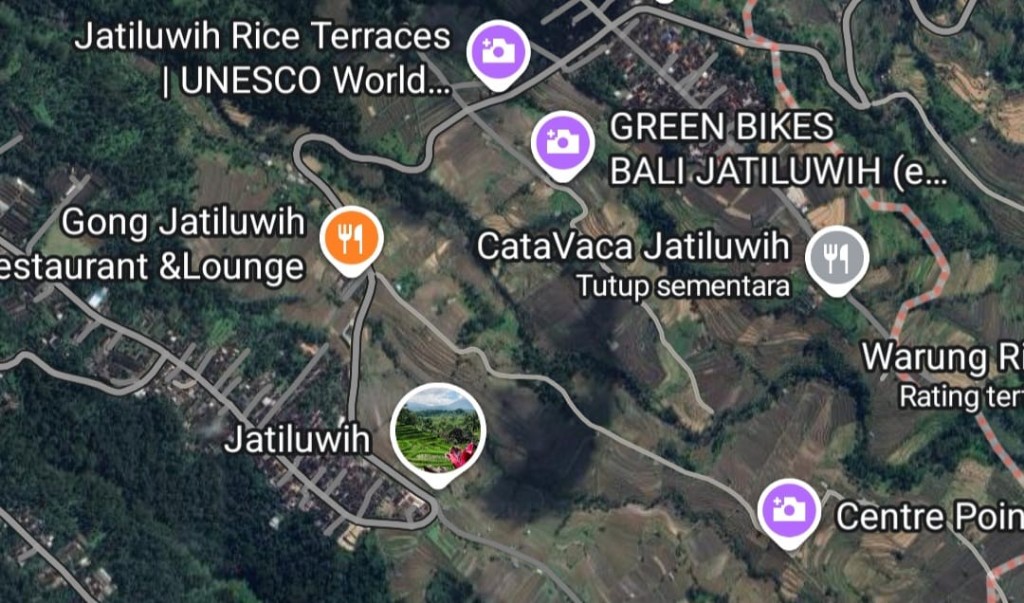
Denpasar (Atnews)—The struggle to achieve recognition of the Subak Jatiluwih as a World Heritage Site by the United Nations Educational, Scientific, and Cultural Organization (UNESCO) World Heritage Committee was no easy feat.
Not only was Jatiluwih recognized, but so was the Catur Angga Batukaru area in Bali, which was designated a World Heritage Site (WBD) by UNESCO in 2012.
The essence of the World Heritage Site dimension can be interpreted as a form of international recognition of a site or cultural landscape possessing Outstanding Universal Value (OUV), meaning extraordinary value that transcends local and national interests and has universal significance for humanity.
The compelling and fundamental aspect of the concept of World Heritage is its universality because it belongs to all nations, regardless of their geographical location. Outstanding universal value refers to cultural and/or natural significance that is so exceptional that it transcends national boundaries and is of equal significance to present and future generations of all humanity.
Therefore, the permanent protection of this heritage is of paramount importance to the international community as a whole.
This value is not only measured by its physical beauty, but also emphasizes its cultural significance, history, knowledge systems, and contributions to human civilization.
This recognition positions the WHS as a representation of a heritage of civilization that possesses uniqueness, authenticity and integrity that must be maintained for its sustainability across generations.
The area encompasses 20 subak groups (traditional irrigation cooperatives), five main temples, and a stunning landscape of rice fields and plantations. Of all the subak areas, Subak Jatiluwih is currently the most popular and frequently visited by tourists.
The Catur Angga Batukaru encompasses a stunning natural landscape, including Batukaru Forest, Lakes Tamblingan and Lake Buyan, 20 subak groups, five main temples, and nine administrative villages.
In addition to the rice fields, the five major temples in this area—Batukaru, Muncaksari, Tambawaras, Besikalung, and Petali—are spiritual tourist attractions.
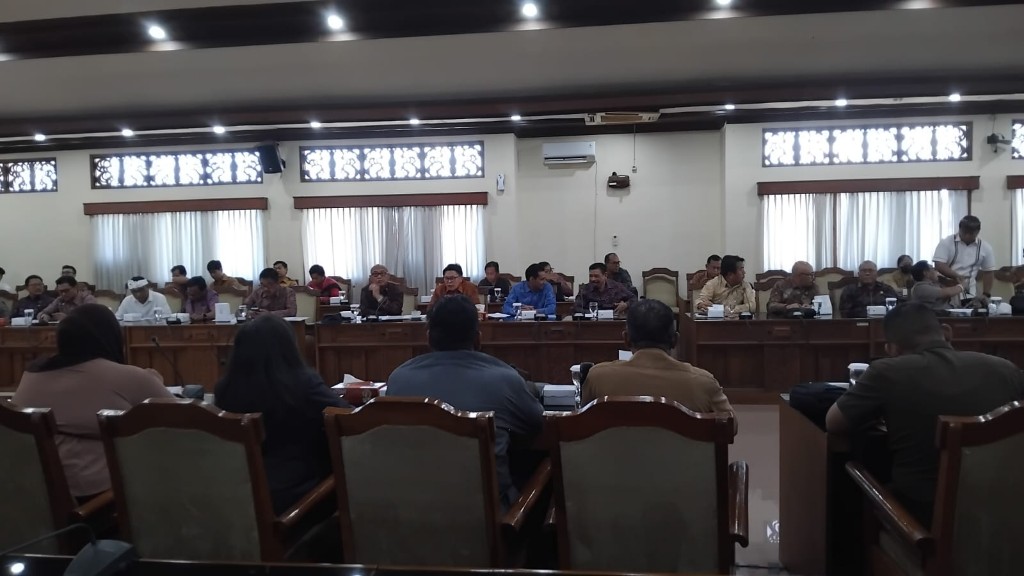
Made Supartha, Chairman of the Special Committee for Spatial Planning, Assets and Licensing (TRAP) of the Bali House of Representative, revealed that it took a long struggle for UNESCO to designate Jatiluwih as a World Heritage Site.
“The process of proposing Subak Jatiluwih as a World Heritage Site began in 2003,” said Supartha, who is also the Chairman of the Indonesian Democratic Party of Struggle (PDI-P) faction of the Bali House of Representative in Denpasar. He explained that the subak system, a traditional rice paddy irrigation system, is estimated to have existed since the 11th century, with 303 hectares of rice fields proposed to UNESCO.
UNESCO Assessor Visits. Over time, the Assessor of UNESCO for Asia-Pacific Region visited repeatedly for evaluations. They recommended expanding the nomination area to align with the designation “Cultural Landscape of Bali Province.”
Approval of 13 other subak groups. Outreach efforts were conducted with the remaining 13 subak groups to expand the nomination area. After intensive discussion and coordination, all subak groups agreed and committed to preservation.
To this end, UNESCO World Heritage Site (2012) recognized the Subak system as a living and sustainable cultural heritage. Furthermore, UN Tourism named it the Best Village in the World (2024). These prestigious awards strengthen the reputation of Jatiluwih in the global tourism arena.
Catur Angga Batukaru Village has four pillars of heritage.
First, the upstream (peak), a protected forest area and sacred springs that serve as the source of the irrigation system.
Second, the downstream (slope), subak agricultural areas and terraced rice fields that rely on irrigation from the upstream.
Third, the coastal (lower areas), residential areas, and centers of economic and commercial activities.
Fourth, the center (cultural center), customary villages, temples, and social facilities as the heart of spiritual life.
It was also explained that the Cultural Landscape of Bali Province, as part of the Subak System, the implementation of the Tri Hita Karana Concept, consists of: 1) the Angga Batukaru Cluster, including the Jatiluwih Area; 2) Pakerisan River Watershed Cluster; 3) Taman Ayun Cluster; as well as 4) Lake Batur Cluster. “These four clusters are called the Cultural Landscape of Bali Province,” he explained.
The Catur Angga Batukaru Cluster administratively has 14 subak groups. The total area spreads across an area of 2,372 hectares (Subak Soka is excluded due to its location east of Yeh Hoo River).
Meanwhile, the Subak Abian (non-irrigated field) has 475 hectares consisting of mixed agricultural land for perennial crops and plantations. Productive plantation areas spreading across around the subak area cover 3,545 hectares of gardens. Protected forest areas serve as ecological buffers and water sources, covering 9,316 hectares of forest.
The administrative divisions include 9 administrative villages and 11 customary villages. The community settlement area in and around the heritage area covers 317 hectares. The specific area of Subak Jatiluwih, which is the main icon, consists of 303 hectares. Administrative structure system integrates formal and customary governance in managing the area.
Commitment to Preserving Authenticity
The Tabanan Regional Government is ready to preserve Subak Jatiluwih, with a primary emphasis on “the authenticity of the site,” or the authenticity and integrity of the subak system, which must be strictly maintained.
Development outside the subak area. Changes and development are permitted outside the core area of Subak Jatiluwih. Homestays, culinary facilities, and home industries for quality souvenirs can be established in surrounding villages.
UNESCO Support for Recovery. If a natural disaster damages the environment of Subak Jatiluwih, UNESCO is committed to providing technical and financial assistance for the recovery and reconstruction process. Therefore, it expects the Tabanan Regional Government to prepare an organic farming program, providing assistance within the capabilities of the region.
The program to reduce rice field taxes, in accordance with statutory regulations, has been provided with tax exemptions. The program provides assistance in the livestock sector within the capabilities of the regional government and so does the program to improve health and education. The Subak Jatiluwih has received a share of the resources of the site from the Jatiluwih World Heritage Management. Two entrances are planned to the site: the east entrance, with large buses parked at the Senganan parking lot, where tourists will be transported by shuttle vans, which can accommodate 4 to 5 passengers, and are managed by the private sector.
Similarly, the west entrance, at the Batukaru parking lot, will be transported by shuttle van. Residents living within the site are permitted to carry out their normal activities and commute using private vehicles, as was the case before entering the Jatiluwih World Heritage Area.
Therefore, the government is responsible for protecting the site from regulatory violations, specifically the 13 or more tourist accommodation buildings in the Jatiluwih World Heritage Area.
There are 13 tourist accommodation buildings found to be in violation of Regional Regulation Number 3/2023 concerning the Tabanan District Spatial Planning (RTRW) within the Jatiluwih World Heritage Area.
The violations include violating the Tabanan District Spatial Planning (RTRW) Regulation, converting Protected Rice Fields (LSD), and developing within a UNESCO cultural landscape area, damaging the visual integrity of the area.
The violations threaten to revoke the World Heritage status, diminish the authenticity of the area, and harm the farming community. Potential sanctions include the loss of international assistance from UNESCO. “Protecting the World Heritage area is not only a legal obligation, but also our moral responsibility to future generations and the international community,” he said.
Enforcing regulations in protecting the Subak Jatiluwih World Heritage Area. The comprehensive legal basis is Law No. 26/2007 concerning Spatial Planning as mentioned in Article 3 letter c and Article 10 Paragraph (1) Letter a that regulate the obligation for sustainable spatial planning and protecting the public interest. There is also Law No. 41/2009 concerning the Protection of Sustainable Food Agricultural Land (LP2B). Article 18, Article 34 Paragraph (1) in conjunction with Article 34 Paragraph (5), Article 44 Paragraph (1) in conjunction with Article 44 Paragraph (2), Article 50, Article 70, and Article 72 regulate the protection of rice fields.
In addition, Law No. 32/2009 concerning Environmental Protection and Management stipulates provisions regarding the Environmental Impact Assessment (AMDAL) and Environmental Management and Monitoring Effort (UKL/UPL) for every activity that impacts the environment. Regulation of the Minister of Agrarian and Spatial Planning/National Land Agency (ATR/BPN) No. 2/2024 concerning National Spatial Planning. Articles 3 and 8 regulate the synchronization of spatial planning with the protection of strategic areas.
Bali Provincial Regulation No. 2/2023 regulates the Bali Provincial Spatial Plan (RTRW) as mentioned in Article 5, Article 48 paragraph (2) letter b and paragraph (3) letter a, Article 61 letter b number 1 and letter c, Article 99, Article 104 paragraph 3, Article 135. Besides, Tabanan District Regulation No. 3/2023 regulates the Tabanan District Spatial Plan (RTRW) 2023-2043 as mentioned in Article 12 paragraph (4), Article 42 paragraph (10), Article 44 paragraph (13), and Article 51 paragraph (4) letter b number 2 specifically regulating the protection of the Jatiluwih area.
Coordination of law enforcement requires synergy between the Bali Provincial Government, Tabanan District, and relevant agencies to ensure effective, measurable, and consistent law enforcement against violations in the World Heritage area. The presence of the Special Committee for Spatial Planning, Asset and Licensing of the Bali House of Representative in Jatiluwih in accordance with the mandate of Article 96, Articles 100 and 101 of the Regional Government Law is granted the oversight authority.
The Special Committee for Special Committee for Spatial Planning, Asset and Licensing of the Bali House of Representative asserts that it is “not anti-investment.” It only has mandatory authority. Regulation is not a strategic policy choice, but rather a constitutional mandate.
The Special Committee for Spatial Planning, Asset and Licensing of the Bali House of Representative is solely focused on ensuring that spatial utilization, regional asset management, and licensing practices comply with statutory provisions.
Any activities having the potential to damage the image of the Jatiluwih Area as a World Heritage Site, the sustainability of the Sustainable Rice Fields, or alter the landscape of the traditional Subak irrigation system must be regulated.
Maintaining the sustainability of the UNESCO World Heritage Site status and the UN Tourism Award for Best Village in the World is a collective principle and commitment.
Strengthening the welfare of farming communities has been in accordance with the vision of Governor of Bali: “Advanced Villages, Prosperous People.” It is realized by creating International-Class Homestays for a Superior Generation and producing a superior generation through the One Family One Scholar, facilitating government programs to increase access to higher education for children of farmers.
Developing a people-centered economy without damaging the environment. Remodeling homes of residents outside the World Heritage of Subak Jatiluwih Area into international-class Green House homestays and restaurants is meant to increase direct income (such as by showcasing hygienic local cuisine).
Coaching Clinic and local skills programs. It implements traditional rice field management, including plowing with cows, rice planting traditionally, mass harvesting Balinese rice varieties using the traditional method and mutual assistance, and preserving local farmer wisdom through the subak system.
Local farmers engage tourists in activities such as harvesting, plowing with cows, transplanting rice seeds in traditional way, mud bathing, eel catching, and trekking in the rice fields, which will ultimately become an attraction directly impacting the income and well-being of the community.
The concept of building cowshed sizing 3 x 6 meters along the rice fields. It is not only for livestock, but also for commercial purposes, including: 1) organic red rice, coffee, lawar delicacy made from young coconut shell or eel, 2) kneaded-grilled eel with chili sauce, rice field snail satay, fried water scavenger beetles, water beetle larvae, 3) gooseweed vegetables, fresh young coconut, green grass jelly ice, Balinese snacks, and so on.
Government support for rice field protection includes the provision of production facilities, distribution of seeds and fertilizers, irrigation, taxation, and agricultural insurance to support welfare of farmer and the sustainability of the subak system. (GAB/001)
Not only was Jatiluwih recognized, but so was the Catur Angga Batukaru area in Bali, which was designated a World Heritage Site (WBD) by UNESCO in 2012.
The essence of the World Heritage Site dimension can be interpreted as a form of international recognition of a site or cultural landscape possessing Outstanding Universal Value (OUV), meaning extraordinary value that transcends local and national interests and has universal significance for humanity.
The compelling and fundamental aspect of the concept of World Heritage is its universality because it belongs to all nations, regardless of their geographical location. Outstanding universal value refers to cultural and/or natural significance that is so exceptional that it transcends national boundaries and is of equal significance to present and future generations of all humanity.
Therefore, the permanent protection of this heritage is of paramount importance to the international community as a whole.
This value is not only measured by its physical beauty, but also emphasizes its cultural significance, history, knowledge systems, and contributions to human civilization.
This recognition positions the WHS as a representation of a heritage of civilization that possesses uniqueness, authenticity and integrity that must be maintained for its sustainability across generations.
The area encompasses 20 subak groups (traditional irrigation cooperatives), five main temples, and a stunning landscape of rice fields and plantations. Of all the subak areas, Subak Jatiluwih is currently the most popular and frequently visited by tourists.
The Catur Angga Batukaru encompasses a stunning natural landscape, including Batukaru Forest, Lakes Tamblingan and Lake Buyan, 20 subak groups, five main temples, and nine administrative villages.
In addition to the rice fields, the five major temples in this area—Batukaru, Muncaksari, Tambawaras, Besikalung, and Petali—are spiritual tourist attractions.
Made Supartha, Chairman of the Special Committee for Spatial Planning, Assets and Licensing (TRAP) of the Bali House of Representative, revealed that it took a long struggle for UNESCO to designate Jatiluwih as a World Heritage Site.
“The process of proposing Subak Jatiluwih as a World Heritage Site began in 2003,” said Supartha, who is also the Chairman of the Indonesian Democratic Party of Struggle (PDI-P) faction of the Bali House of Representative in Denpasar. He explained that the subak system, a traditional rice paddy irrigation system, is estimated to have existed since the 11th century, with 303 hectares of rice fields proposed to UNESCO.
UNESCO Assessor Visits. Over time, the Assessor of UNESCO for Asia-Pacific Region visited repeatedly for evaluations. They recommended expanding the nomination area to align with the designation “Cultural Landscape of Bali Province.”
Approval of 13 other subak groups. Outreach efforts were conducted with the remaining 13 subak groups to expand the nomination area. After intensive discussion and coordination, all subak groups agreed and committed to preservation.
To this end, UNESCO World Heritage Site (2012) recognized the Subak system as a living and sustainable cultural heritage. Furthermore, UN Tourism named it the Best Village in the World (2024). These prestigious awards strengthen the reputation of Jatiluwih in the global tourism arena.
Catur Angga Batukaru Village has four pillars of heritage.
First, the upstream (peak), a protected forest area and sacred springs that serve as the source of the irrigation system.
Second, the downstream (slope), subak agricultural areas and terraced rice fields that rely on irrigation from the upstream.
Third, the coastal (lower areas), residential areas, and centers of economic and commercial activities.
Fourth, the center (cultural center), customary villages, temples, and social facilities as the heart of spiritual life.
It was also explained that the Cultural Landscape of Bali Province, as part of the Subak System, the implementation of the Tri Hita Karana Concept, consists of: 1) the Angga Batukaru Cluster, including the Jatiluwih Area; 2) Pakerisan River Watershed Cluster; 3) Taman Ayun Cluster; as well as 4) Lake Batur Cluster. “These four clusters are called the Cultural Landscape of Bali Province,” he explained.
The Catur Angga Batukaru Cluster administratively has 14 subak groups. The total area spreads across an area of 2,372 hectares (Subak Soka is excluded due to its location east of Yeh Hoo River).
Meanwhile, the Subak Abian (non-irrigated field) has 475 hectares consisting of mixed agricultural land for perennial crops and plantations. Productive plantation areas spreading across around the subak area cover 3,545 hectares of gardens. Protected forest areas serve as ecological buffers and water sources, covering 9,316 hectares of forest.
The administrative divisions include 9 administrative villages and 11 customary villages. The community settlement area in and around the heritage area covers 317 hectares. The specific area of Subak Jatiluwih, which is the main icon, consists of 303 hectares. Administrative structure system integrates formal and customary governance in managing the area.
Commitment to Preserving Authenticity
The Tabanan Regional Government is ready to preserve Subak Jatiluwih, with a primary emphasis on “the authenticity of the site,” or the authenticity and integrity of the subak system, which must be strictly maintained.
Development outside the subak area. Changes and development are permitted outside the core area of Subak Jatiluwih. Homestays, culinary facilities, and home industries for quality souvenirs can be established in surrounding villages.
UNESCO Support for Recovery. If a natural disaster damages the environment of Subak Jatiluwih, UNESCO is committed to providing technical and financial assistance for the recovery and reconstruction process. Therefore, it expects the Tabanan Regional Government to prepare an organic farming program, providing assistance within the capabilities of the region.
The program to reduce rice field taxes, in accordance with statutory regulations, has been provided with tax exemptions. The program provides assistance in the livestock sector within the capabilities of the regional government and so does the program to improve health and education. The Subak Jatiluwih has received a share of the resources of the site from the Jatiluwih World Heritage Management. Two entrances are planned to the site: the east entrance, with large buses parked at the Senganan parking lot, where tourists will be transported by shuttle vans, which can accommodate 4 to 5 passengers, and are managed by the private sector.
Similarly, the west entrance, at the Batukaru parking lot, will be transported by shuttle van. Residents living within the site are permitted to carry out their normal activities and commute using private vehicles, as was the case before entering the Jatiluwih World Heritage Area.
Therefore, the government is responsible for protecting the site from regulatory violations, specifically the 13 or more tourist accommodation buildings in the Jatiluwih World Heritage Area.
There are 13 tourist accommodation buildings found to be in violation of Regional Regulation Number 3/2023 concerning the Tabanan District Spatial Planning (RTRW) within the Jatiluwih World Heritage Area.
The violations include violating the Tabanan District Spatial Planning (RTRW) Regulation, converting Protected Rice Fields (LSD), and developing within a UNESCO cultural landscape area, damaging the visual integrity of the area.
The violations threaten to revoke the World Heritage status, diminish the authenticity of the area, and harm the farming community. Potential sanctions include the loss of international assistance from UNESCO. “Protecting the World Heritage area is not only a legal obligation, but also our moral responsibility to future generations and the international community,” he said.
Enforcing regulations in protecting the Subak Jatiluwih World Heritage Area. The comprehensive legal basis is Law No. 26/2007 concerning Spatial Planning as mentioned in Article 3 letter c and Article 10 Paragraph (1) Letter a that regulate the obligation for sustainable spatial planning and protecting the public interest. There is also Law No. 41/2009 concerning the Protection of Sustainable Food Agricultural Land (LP2B). Article 18, Article 34 Paragraph (1) in conjunction with Article 34 Paragraph (5), Article 44 Paragraph (1) in conjunction with Article 44 Paragraph (2), Article 50, Article 70, and Article 72 regulate the protection of rice fields.
In addition, Law No. 32/2009 concerning Environmental Protection and Management stipulates provisions regarding the Environmental Impact Assessment (AMDAL) and Environmental Management and Monitoring Effort (UKL/UPL) for every activity that impacts the environment. Regulation of the Minister of Agrarian and Spatial Planning/National Land Agency (ATR/BPN) No. 2/2024 concerning National Spatial Planning. Articles 3 and 8 regulate the synchronization of spatial planning with the protection of strategic areas.
Bali Provincial Regulation No. 2/2023 regulates the Bali Provincial Spatial Plan (RTRW) as mentioned in Article 5, Article 48 paragraph (2) letter b and paragraph (3) letter a, Article 61 letter b number 1 and letter c, Article 99, Article 104 paragraph 3, Article 135. Besides, Tabanan District Regulation No. 3/2023 regulates the Tabanan District Spatial Plan (RTRW) 2023-2043 as mentioned in Article 12 paragraph (4), Article 42 paragraph (10), Article 44 paragraph (13), and Article 51 paragraph (4) letter b number 2 specifically regulating the protection of the Jatiluwih area.
Coordination of law enforcement requires synergy between the Bali Provincial Government, Tabanan District, and relevant agencies to ensure effective, measurable, and consistent law enforcement against violations in the World Heritage area. The presence of the Special Committee for Spatial Planning, Asset and Licensing of the Bali House of Representative in Jatiluwih in accordance with the mandate of Article 96, Articles 100 and 101 of the Regional Government Law is granted the oversight authority.
The Special Committee for Special Committee for Spatial Planning, Asset and Licensing of the Bali House of Representative asserts that it is “not anti-investment.” It only has mandatory authority. Regulation is not a strategic policy choice, but rather a constitutional mandate.
The Special Committee for Spatial Planning, Asset and Licensing of the Bali House of Representative is solely focused on ensuring that spatial utilization, regional asset management, and licensing practices comply with statutory provisions.
Any activities having the potential to damage the image of the Jatiluwih Area as a World Heritage Site, the sustainability of the Sustainable Rice Fields, or alter the landscape of the traditional Subak irrigation system must be regulated.
Maintaining the sustainability of the UNESCO World Heritage Site status and the UN Tourism Award for Best Village in the World is a collective principle and commitment.
Strengthening the welfare of farming communities has been in accordance with the vision of Governor of Bali: “Advanced Villages, Prosperous People.” It is realized by creating International-Class Homestays for a Superior Generation and producing a superior generation through the One Family One Scholar, facilitating government programs to increase access to higher education for children of farmers.
Developing a people-centered economy without damaging the environment. Remodeling homes of residents outside the World Heritage of Subak Jatiluwih Area into international-class Green House homestays and restaurants is meant to increase direct income (such as by showcasing hygienic local cuisine).
Coaching Clinic and local skills programs. It implements traditional rice field management, including plowing with cows, rice planting traditionally, mass harvesting Balinese rice varieties using the traditional method and mutual assistance, and preserving local farmer wisdom through the subak system.
Local farmers engage tourists in activities such as harvesting, plowing with cows, transplanting rice seeds in traditional way, mud bathing, eel catching, and trekking in the rice fields, which will ultimately become an attraction directly impacting the income and well-being of the community.
The concept of building cowshed sizing 3 x 6 meters along the rice fields. It is not only for livestock, but also for commercial purposes, including: 1) organic red rice, coffee, lawar delicacy made from young coconut shell or eel, 2) kneaded-grilled eel with chili sauce, rice field snail satay, fried water scavenger beetles, water beetle larvae, 3) gooseweed vegetables, fresh young coconut, green grass jelly ice, Balinese snacks, and so on.
Government support for rice field protection includes the provision of production facilities, distribution of seeds and fertilizers, irrigation, taxation, and agricultural insurance to support welfare of farmer and the sustainability of the subak system. (GAB/001)

Baca Artikel Menarik Lainnya : Penyaluran Dana Desa Akan Membaik