Takṣhaśhilā University of North India Aged 2700 Years, the Oldest Institution on Planet Earth
Admin - atnews
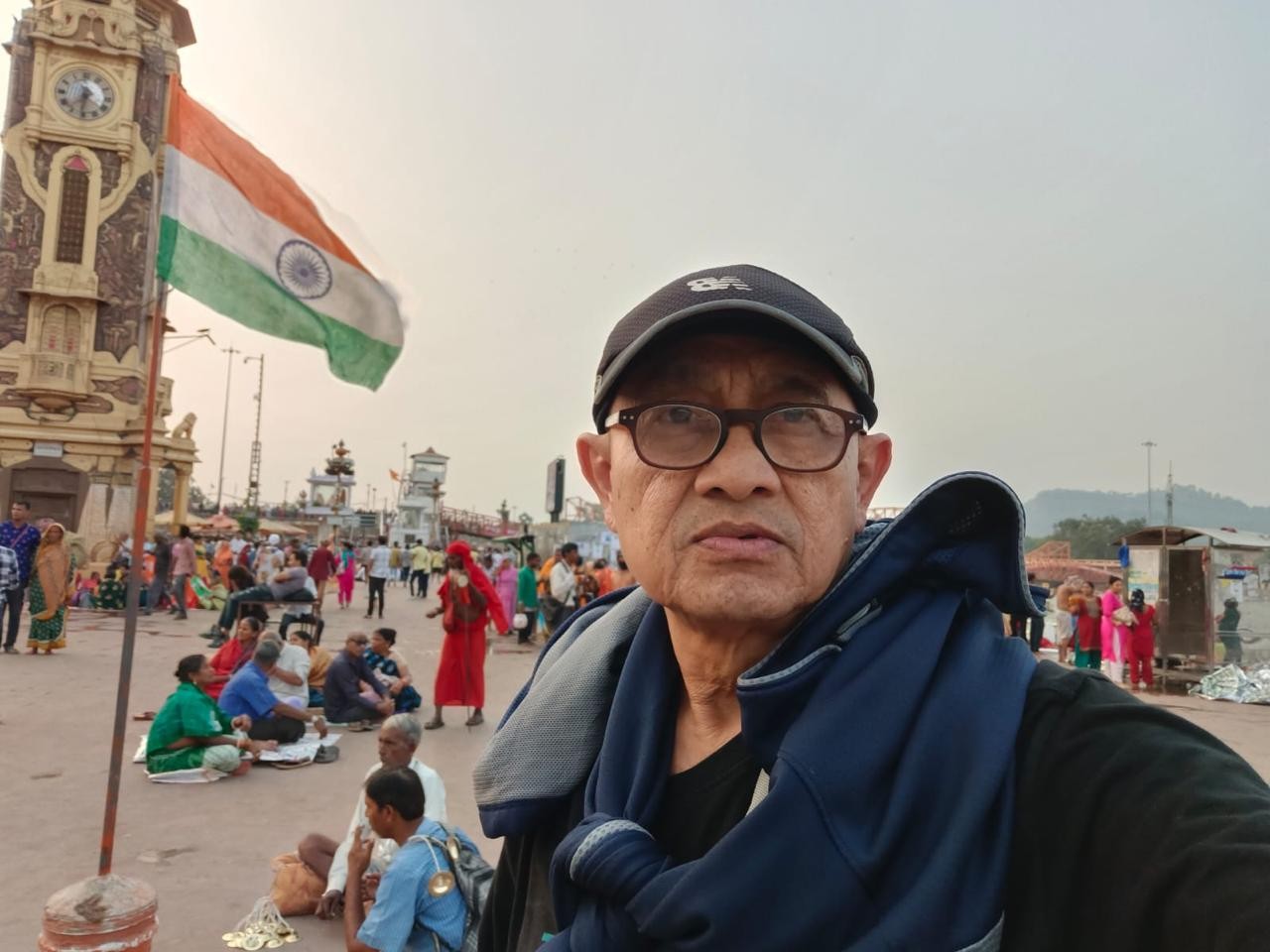
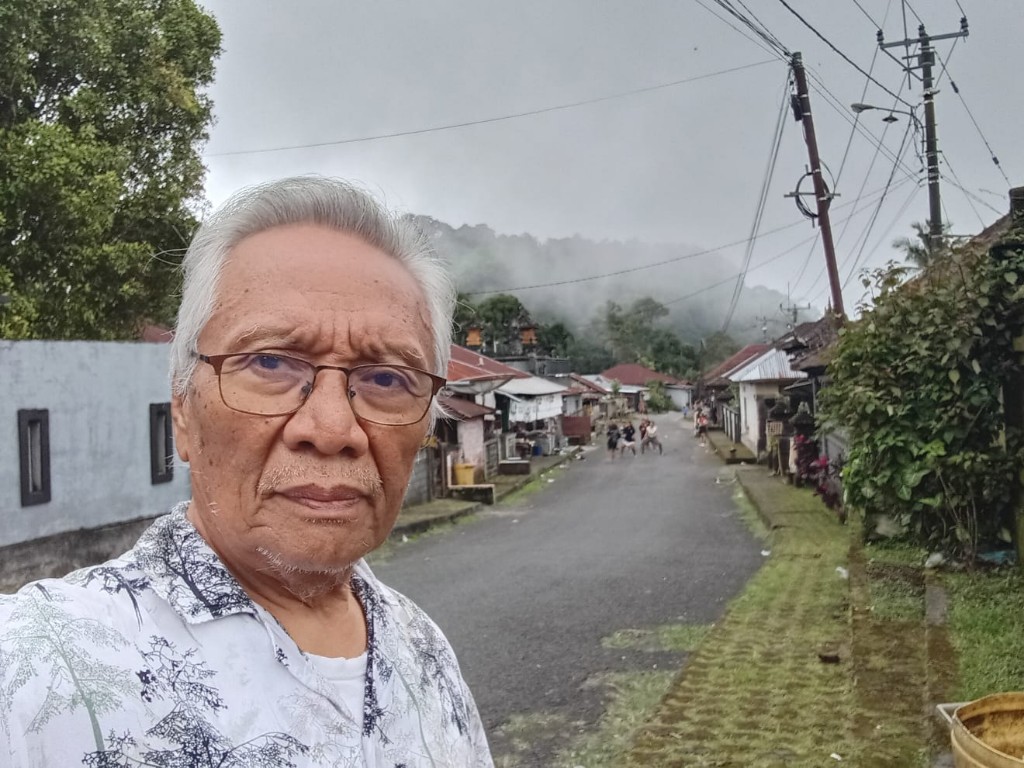
Denpasar (Atnews) - Global Traveler Putu Suasta, who once studied at Gadjah Mada University (UGM), New York University and Cornell University, stated that the Bharatavarsa (Indian) civilization had the oldest university on planet Earth called Taxila University (Takṣhaśhilā Viśvavidyālaya).
Takṣhaśhilā is the first international university model in ancient civilization according to information, estimated to occur (around 400-500 BC to 550 AD), named after the “Taksha Cut Rock City” in ancient North India.
The ancient educational institution was in Taxila, present-day Gandhara Punjab Pakistan, near the banks of the Indus River. Takṣhaśhilā is a legacy of the Ramayana era originating from King Taksha, nephew of Shri Rama and son of Bharata.
According to various sources, King Taksha ruled the Taksha Khanda region which stretched from the northern outskirts of India to modern Uzbekistan. In fact, Tashkent, the current capital of Uzbekistan, also gets its name from the same source. The town is named in honor of Takas that means ‘Rock of Takas’ and is renowned for its wealth.
In the Ramayana epic, (Vangavasi-Uttarakandam Edition--Chapter XIV), Bharata, brother of Sri Rama, is said to have built two cities, namely Takṣhaśhilā and Puskalavata, and appointed his sons, Takkha and Puskala, to be their respective rulers. Citizens of both cities are described to be very prosperous because they are pious and prosperous.
A number of information sourced from historical records, like the Uttarakanda Ramayana, states that Takṣhaśhilā was a center of learning and science for people from various parts of the country who used the educational institutions there to specialize in Law (Vyavahara). Vayu Purana Chapter 88, literature, natural science refers to Takṣhaśhilā, as the capital of Takka, a beautiful city.
The Brihatsamhita mentions Takṣhaśhilā as the most famous city, thus implying that the city was undoubtedly an ancient center of education and culture. “Aradanakalpalata” written by Kaemendra states that the son of Asoka, Kunala, was sent by Asoka to conquer Takṣhaśhilā ruled by Kunjarakarna.
In the Mahabharata, Parikshit (grandson of Arjuna), the heir to the Kuru kingdom is the ruler of Takṣhaśhilā.
According to the Mahabharat, Janmanjeya performed ‘Sarpa-Satra’ or Snake Sacrifice, in Takṣhaśhilā. Later that place, it is believed that the Mahabharata was first recited at Takṣhaśhilā by Vaisampayana to Janmanjeya
Vaisampayana was a disciple of Vyasadeva at the behest of Vyasa himself. According to records from various sources, it is believed that this story was first recited by Vaishampayana at the behest of Vyasa during the snake sacrifice performed by Janamejaya at Takṣhaśhilā.
The audience also included Ugrashravas, an itinerant poet, who then recited the story to a group of priests at an ashram in the Naimisha Forest from where it was further disseminated.
The heir to the Kuru Kingdom, Parikshit (grandson of Arjuna) is said to have reigned in Takṣhaśhilā.
Dhammapadadattahakatha tells of a student who went to Taxila, far from Benares, to study ‘Silpa’ amidst five hundred of his classmates.
In several places, in the Pali Jataka, there are references to famous teachers who lived in Taxila and the various subjects taught there.
Foreign students and writers from Greece, Rome, the Mediterranean, Egypt, Babylonia and China have left valuable records about Taxila to the international world.
Meanwhile, Arrian calls it a large and thriving city during the era of Alexander the Great. Takshashila, or better known as Taxila, was the best educational institution of its time. It continued for hundreds of years in the land of the Hindus.
The campus was established as a center for Vedic, natural science, medical, religious and secular education and learning. Meanwhile, in the early centuries AD, the city also became a leading center of Buddhist scholarship.
Around 2700 years ago, Takshashila has offered courses in more than 64 different fields of study ranging from surgery and commerce to music and dance, and from philosophy and Ayurveda to grammar, politics, archery and warfare.
In addition, the courses were taught to find hidden treasures and decrypt messages as well. Moreover, the admission process was also quite strict and purely based on merit. And, this competition would be participated by eligible students across the continent. Additionally, they should also have completed elementary school and be 16 years old, before registering for a course there. This is similar to the modern education model before entering university.
Moreover, historical records show off that this institution recognized all people as equals; there is no discrimination based on caste, creed or religion.
Likewise, it is said that Takṣhaśhilā at that time was described as a safe city, rich, prosperous abundance in North India. This university is an educational center for more than 10,000 students who come from various parts of the world to gather knowledge and education. The campus attracted students from all over the world including China, Arabia, Egypt, Syria, Babylonia and Greece.
It is believed that students began their studies at Takshashila around the age of 16, after they have completed primary education at home, and secondary education at the Ashram.
Teachers who were said to have taught at Taxila University were Pāṇini (in fifth century BC teaching Indian Grammar), Chanakya, the influential Prime Minister of the founder of the Maurya Empire, Chandragupta Maurya, Kumāralāta as the founder of the Sautrāntika school, who was also an excellent teacher at Taxila University. and attracting students from as far away as China.
With world-renowned campus alumni like Chanakya as one of the best political experts and prime minister of the Mauryan Empire, Chanakya or Kautilya wrote the famous Arthashastra, a compilation of 15 books which is undoubtedly one of the oldest but best works on economic policy, governance country, political tasks, military strategy, administrative skills, and the intelligence system of the country.
In fact, he has been hailed as the third best management advisor in Indian history after Sri Krishna himself and Shakuni, he was the main force behind the founding of the famous Mauryan Empire.
There was also Panini. If Chanakya was a strong stalwart in politics; Panini was a master of grammar and language. In fact, Ashtadhyayi as the work of Panini is considered one of the most profound, albeit complex, works of grammar. It provides a highly technical perspective on Sanskrit grammar and illustrates all the nuances, rules and features perfectly. His theory of morphological analysis was more advanced than any Western theory before the mid-20th century and his analysis of compound words still forms the basis of modern linguistic compounding theory, which borrows Sanskrit terms such as bahuvrihi and dvandva.
Likewise, Vishnu Sharma, the author of the Panchatantra stories, the famous writer behind these simple but amazing stories was also a disciple of Takshashila. After all, not everyone can teach the important and difficult art of political science through simple, loving stories.
According to information from various sources, Vishnu Sharma wrote Panchatantra to educate three foolish princes from kings to great political leaders in a period of 6 months.
Charaka, famous author of Charaka Samhita on the power of a good doctor. Charaka was one of the most famous Ayurvedic doctors ever and had written the Charaka Samhita which, along with the Sushrutha Samhita, Ashtanga Sangraha and Ashtanga Hrudayam, forms the core of modern Ayurveda.
Jivak, a man who can find out the physical problems of a body just by reading its pulse. After studying at University for seven years and specializing in surgery, Marma and Panchakarma, Jivak also discovered the treatment for Filariasis during that time. Being the personal physician of Buddha, he also healed Nandi Vran of the Buddha. The beautiful Amrapali maintained her youthful and beautiful face due to many operations and Marma points performed on her by Jivak.
It is also explained that Taxila was at the crossroads of main trade routes in Asia, and is thought to have been inhabited by Indians, Persians, Greeks, Scythians and many ethnicities originating from various regions of the Achaemenid Empire.
On that account, the city of Inmtu became the capital of the Achaemenid region in northwestern Ancient India after the Achaemenid conquest of the Indus Valley around 540 BC.
Moreover, it is strategically located on a branch of the Silk Road that connected the Chinese Peninsula to the West, Takṣhaśhilā was later designated a UNESCO World Heritage Site in 1980 and is located near Rawalpindi in modern Pakistan.
According to John Marshall as quoted from Wikipedia, in early Buddhist literature, particularly in the Jatakas, Taxila is often mentioned as a university center where students could receive instruction in almost any subject, religious or secular, from the Vedas to mathematics and medicine, even astrology and archery.
The role of Taxila as a center of science increasingly strengthened during the Mauryan Empire and Greek (Indo-Greek) ruled in the third and second centuries BC.
It was not a university in the modern sense, as the teachers who lived there probably did not have formal membership in a particular college, unlike the first boarding Nalanda University of the world located in Bihar, India which later emerged.
However, the campus was also destroyed by colonialists, when the new Nalanda University inaugurated by Prime Minister Shri Narendra Modi in Rajgir, Bihar, Wednesday (June 19).
The university was established as a result of collaboration between India and the East Asia Summit (EAS) countries. Several prominent figures including Heads of Missions from 17 countries attended the inauguration ceremony. The Prime Minister also planted mud trees following the inauguration of this international university. Apart from India, 17 other countries, namely Australia, Bangladesh, Bhutan, Brunei. Darussalam, Cambodia, China, Indonesia, Laos, Mauritius, Myanmar, New Zealand, Portugal, Singapore, Korea South, Sri Taxilat Thailand, and Vietnam also participated.
Meanwhile, Taxila University was destroyed by Toramana in the fifth century AD, apparently ending activities of Taxila as a center of scientific civilization. Takshashila University was attacked and looted and its books were burned, the teachers were killed by the Huns.
The decline of Takshashila marked the destruction, persecution and decline of Indian education, thought and structure.
How very sad the situation is as the current generation does not know how advanced the educational legacy of Sanatana Dharma is and the world used to come in flocks and learn from it.
However, education has been considered sacred since ancient times, an ancient Sanskrit quote says ‘Swagruhe Pujyate Murkhaha; Swagraame Pujyate Prabhuhu Swadeshe Pujyate Raja; Vidvaansarvatra Pujyate’ meaning ‘A fool is worshiped in his house. A leader is worshiped in his city. A king is worshiped in his kingdom. A person who has knowledge is worshiped everywhere.’
Therefore, education cannot be denied even to the poorest students. Admission is based on merit, and financial support is often provided by the community or through work-study arrangements.
Thus, the state must be present and rich people participate in developing education. As Indonesia currently allocates 20 percent of the education budget from both the State and Regional Budgets, this is a mandate from Article 31 Paragraph (4) of the 1945 Constitution.
Moreover, there is a decision of Constitutional Court No. 24/PUU-VI/2007, where it is hoped that the Government will not delay the budget requirements for at least education from both the State Budget and Regional Budget.
The small Bali Province is expected to prioritize human resource development by building international class from basic to higher education institutions. This institution is able to build relationships globally, especially as Bali is a world tourist destination. “Bali is strategic in developing international class educational institutions,” said Suasta in Denpasar, Wednesday (Jun 26).
In the education sector, his party has also acted and revealed the role of Prof. Ngurah Bagus in the dynamics of very central Baliology over a period of 25 years. Baliology means the study of Balinese culture in terms of all aspects of its life. Baliology is what connects Udayana University with well-known campuses throughout the world.
Udayana University collaborated with the University of Sydney, ANU Australia, University of Hawaii, Cornell University, Princeton University, University of Tokyo, Leiden University, Sorbonne University France, Gadjah Mada University (UGM), University of Hawaii, University of San Francisco, University of Indonesia as well as University of Wollongong.
During the Baliology meeting at the University of Sydney, Prof. Bagus also met Prof. Adrian Vickers from the University of Sydney, Prof. Mark Hobart, University of London, Prof. Ayami Nakatami, University of Tokyo and Prof. Hildred Geertz, Princeton University, whose theme was the transformation of Balinese culture. Some of his papers were collected into one book ‘The Staying in the Global Village: Bali in the 21st Century’ published at the University of Hawaii. It is a very monumental book.
Prof. Bagus, known as the Father of Anthropology and Balinese Cultural Studies (The Father of Balinese Studies), has left an eternal legacy in the form of Humanities sciences, especially Balinese Anthropology (Culture) and Balinese Cultural Studies at the Faculty of Humanities (Udayana University).
It was explained that in May 1984 the Minister of Education and Culture, Nugroho Notosusanto, inaugurated the establishment of Baliology, a study that is equivalent to Javanology, Sundanology, Galigology, Malayology and studies of other ethnic groups which were founded later.
All of these study bodies are under the umbrella of Indonesialogy. The study of Balinese culture is not an independent activity, but is part of efforts to achieve overall national education goals. In other words, this Baliology ‘Project’ was held primarily to serve educational needs, understanding Pancasila, the Archipelago and Bhinneka Tunggal Ika or Unity in Diversity.
To achieve this goal, the educational process definitely requires a certain set of values as a medium in addition to the typical software and hardware methods and equipment needed for it. Likewise, culture is a set of values.
However, what is clear is that the values we need as a medium of education and culture must be extracted from our own cultural treasures and from our own earth, among those that are recognized as Balinese culture.
Thus, the research, thinking and development of Baliology do not only operate in the field of culture, but also in the field of education in a reciprocal functional relationship between the two fields.
Meanwhile, when we talk about culture, we will definitely touch on elements of space and time as well as history (past, present and future), interpretation, evolution, creation and norms (development of human qualities).
Considering the very broad scope of work with very basic and decisive work themes, we should all feel called to actively participate in exploring and developing Balinese culture.
Likewise, there is a pretension to participation that is not determined by official position, political position or lineage, but is based on intellectual characteristics and the ability to do something. This intellectual characteristic is obtained from the habit of contemplating something deeply, the habit of using reasoning and the habit of introducing reason to science.
Baliology means the science of Balinese culture. This means that science is consciously involved in efforts to explore, learn to understand and assess the value system that was formulated and lived by our ancestors in Bali.
They use science with all its specific methods and ways of working to trace the past that existed and lived in Bali in order to obtain a solid footing to jump into the future. In carrying out intellectual activities, humans experience doubts about assessing their abilities because of their natural limitations in knowing something. But on the other hand, thanks to the intellectual ability to know humans critically assess their own knowledge situation.
Based on this critical awareness, it would be appropriate to say that there is progress in science. This recognition of progress is based on solid norms contained in the ability to know itself.
Progress appears in two directions: towards the past and the future. This means, on the one hand, science today is able to understand things that were previously not understood so that there is progress compared to the past. We maintain Balinese civilization with a critical, open attitude and open ourselves to new values that increase human dignity. (GAB/001)

Baca Artikel Menarik Lainnya : Festival Balingkang Kintamani 2019 untuk Gaet Turis Tiongkok ke Bali