India's Space Sector: A Launchpad for Global Partnerships
Admin 2 - atnews
By Gurjit Singh
Growing competition in outer space provides India with a unique opportunity to shape a narrative in which collaboration, rather than confrontation, drives space exploration.
Recognised as a trustworthy and cost-effective spacefaring nation, India is now well placed to transform its technological advances into enduring international partnerships that contribute to scientific progress, economic growth, and sustainable development.
India's journey into space has been distinctive. Unlike many space programmes that emerged from Cold War rivalries, India's programme was conceived as an instrument of national development.
Dr. Vikram Sarabhai anchored India's space vision in practical applications that would improve the lives of ordinary people.
Under his leadership, satellites were developed to strengthen communications, weather forecasting, disaster management, healthcare, agriculture and education.
This development-oriented philosophy remains central to India's space programme and resonates strongly with the needs of countries in the Global South, which seek practical applications of space technology rather than prestige alone.
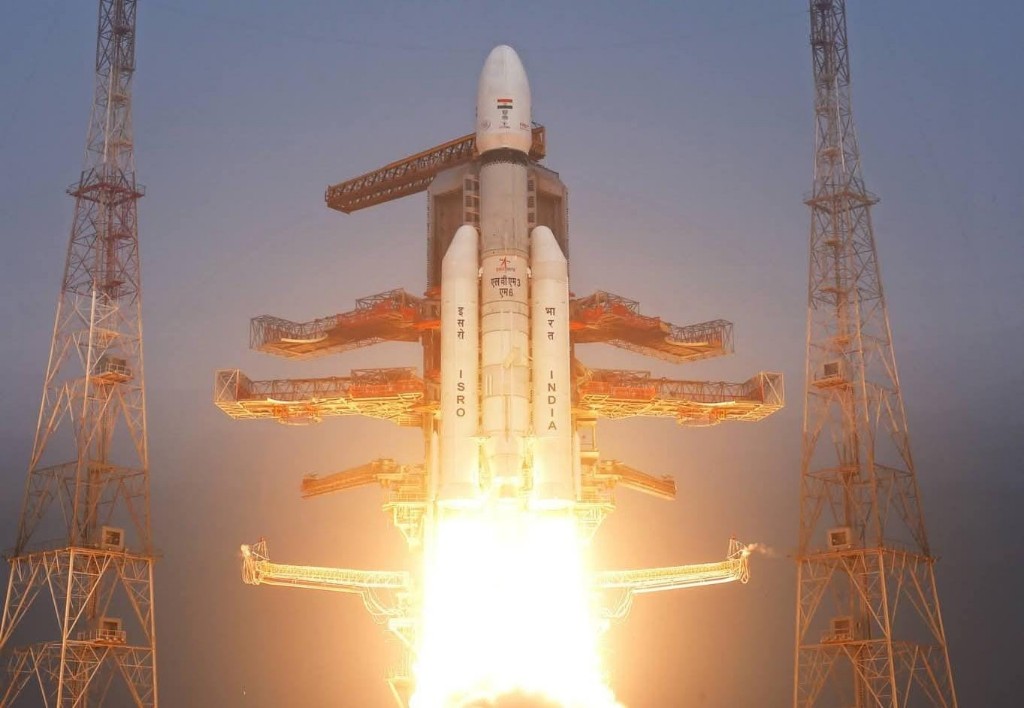
Today, India's achievements extend beyond developmental applications. The Chandrayaan missions, the Mars Orbiter Mission, the Aditya-L1 solar observatory, and the forthcoming Gaganyaan human spaceflight programme have established India as a nation capable of executing sophisticated and reliable space missions.
Chandrayaan-3's successful soft landing near the Moon's south pole placed India among an exclusive group of space powers while demonstrating that world-class innovation can be achieved at comparatively modest cost.
India's growing credibility comes at a time when the global space economy is expanding rapidly. Valued at over US$600 billion today and projected to approach US$1.8 trillion by 2035, the sector is increasingly driven by commercial activity in satellite communications, Earth observation, navigation, climate services, broadband connectivity, and emerging fields such as in-orbit servicing and lunar exploration.
Many countries aspire to participate but lack indigenous capabilities. They seek dependable long-term partners rather than merely launch providers.
India possesses the capabilities to meet these requirements. The liberalisation of the space sector in 2020 transformed the ecosystem by opening it to private participation.
The establishment of the Indian National Space Promotion and Authorisation Centre (IN-SPACe), the expanding commercial role of NewSpace India Limited, and the growth of private enterprises have created one of the world's most dynamic emerging space ecosystems.
Indian startups are developing launch vehicles, satellite platforms, geospatial applications and propulsion technologies that are attracting global investment and customers.
Companies such as Skyroot Aerospace, Pixxel and Agnikul Cosmos have demonstrated that Indian private enterprise can compete internationally in advanced space technologies.
The next step is to internationalise this ecosystem.
Rather than positioning itself only as a low-cost launch destination, India will offer comprehensive partnerships encompassing satellite design, launch services, mission operations, ground stations, astronaut training, capacity building and downstream applications in agriculture, disaster management and maritime security.
Such integrated partnerships would be valuable for countries across the Global South and the Indo-Pacific seeking affordable, customised and reliable technologies to meet their development priorities.
India has demonstrated the diplomatic value of such cooperation. Through the South Asia Satellite, it provided communication and developmental benefits to neighbouring countries.
Indian launch vehicles have successfully placed hundreds of foreign satellites into orbit for governments, universities and commercial operators around the world.
India's decision to join the Artemis Accords reflects its willingness to participate in the peaceful exploration of the Moon through international collaboration. Cooperation with NASA, the European Space Agency and JAXA has strengthened India's scientific and technological capabilities.
These partnerships reinforce India's standing as a leading voice of the Global South. India offers development partnerships based on affordability, reliability and mutual respect rather than creating technological dependence.
Space cooperation has therefore become an increasingly important instrument of Indian diplomacy, strengthening bilateral relationships while delivering tangible developmental benefits.
To realise its full potential, India will aim to sustain the momentum of reform. Faster regulatory approvals, greater access to venture capital, stronger intellectual property protection, and closer collaboration among research institutions, industry and academia will be essential.
Public procurement policies would continue supporting Indian startups, enabling them to scale up, innovate and integrate into global supply chains.
India is positioned to play a larger role in shaping the governance of outer space. Orbital congestion, space debris, responsible resource utilisation and equitable access to emerging space opportunities are becoming pressing international concerns.
As space activities expand, there will be an increasing need for countries capable of building consensus on responsible norms and practices.
India's long-standing commitment to the peaceful uses of outer space, combined with its growing technological capabilities, equips it to contribute meaningfully to the development of rules that promote transparency, sustainability and equitable access.
The coming decade will determine not only which countries lead in space but also how space is governed. With its scientific capabilities, entrepreneurial ecosystem and international credibility, India is uniquely placed to bridge the gap between established and emerging space nations.
By building collaborative partnerships founded on inclusivity, mutual benefit and innovation, India can transform its space programme into a major pillar of its global engagement.
In an increasingly divided world, India's space sector offers a powerful reminder that the greatest achievements in space are those that bring nations together. That may well become India's most enduring contribution to humanity's next frontier.
*) Gurjit Singh, former Ambassador and author
Baca Artikel Menarik Lainnya : Penyaluran Dana Desa Akan Membaik