Bali Flood on Pagerwesi, Prof. Sutarya: Balinese Culture Inherits Water Management Policies, Flooding Should Not Happen
Admin - atnews
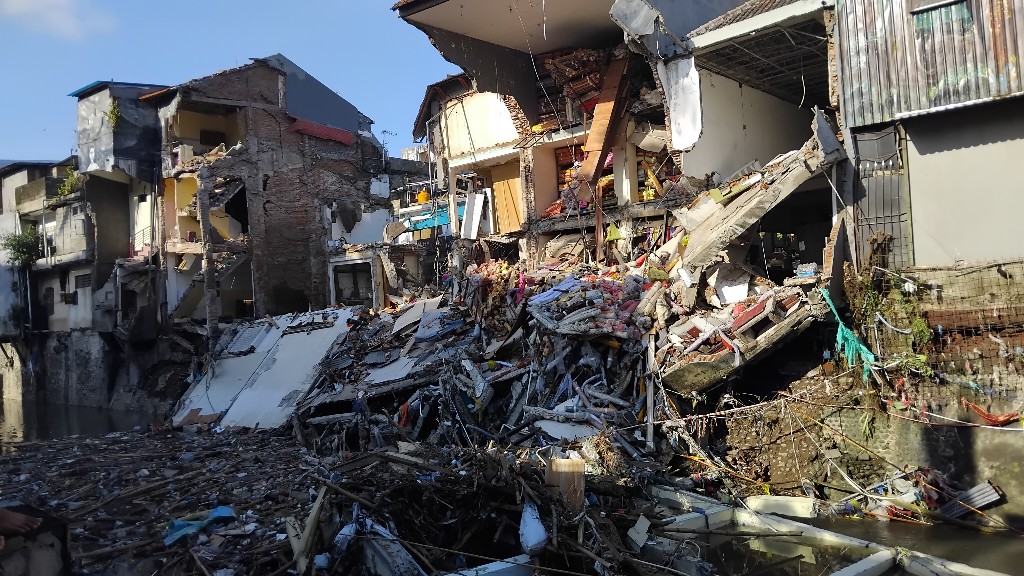
Denpasar (Atnews) - Heavy rains having lashed Bali over the past two days have caused flooding in several areas across the Island of the Gods.
The flooding even coincided with the Hindu holiday of Pagerwesi. Several buildings collapsed along riverbanks, vehicles were submerged, markets were flooded as well as bridges collapsed.
Therefore, academic Prof. Gede Sutarya highlighted the current situation in Bali. He stated that Bali is renowned for its water management.
King of Kahuripan, Airlangga, studied in Bali to build irrigation systems in Java, utilizing springs on Mount Penanggungan.
Balinese palm-leaf manuscripts (lontar) also pass down these policies through rituals, customs and ceremonies to maintain waterways.
“If we follow this policy, Bali should not flood. River boundaries, for example, are protected as mentioned in the palm-leaf manuscripts where it prohibits the use of riverside trees for construction, let alone living along riverbanks,” emphasized Prof. Sutarya, who is also a Professor at the I Gusti Bagus Sugriwa State Hindu University (UHN), in Denpasar on Wednesday (Sep 10).
If this noble culture of Bali was implemented, Bali would not possibly flood. If it floods now, it means there is a problem with Balinese morals, ethics and social events. This means there is a major problem with Balinese culture.
“This disaster poses a moral question for us as Balinese. Are we truly practicing Balinese culture?” he asked.
On that account, the question should not be answered with written statements, regional regulations or circulars, but with concrete action. For example, buildings along riverbanks must be tidied up. “Water channels must be widened,” he stressed.
He added that morality and ethics are linked to prosperity. Countries with high levels of honesty, such as Switzerland and Finland, are among the most prosperous.
Bhutan, for example, is a small, but very happy country. Conversely, the countries preaching the most about morals and ethics are among the poorest because those who like to preach considered to have done it by just talking.
On that account, if your country is still poor, let us first question your morality and ethics. Is the government honest in managing taxes? Are the people honest in paying taxes? Are employers honestly giving the rights of their employees? Are employees also working honestly? Si Bento preaches “a sermon about morals and fairness are my breakfast, but the deception continues.”
Meanwhile, Sugi Lanus, a reader of Balinese and ancient Javanese lontar manuscripts, posted on his social media account: Balinese palm-leaf manuscripts prohibit building on Karang Tenget (haunted land), Karang Suwung (deserted land), Telajakan (space between house compound and public road), Hulun Pangkung (creek upstream) and Rejeng Tukad (slope land at riverside).
Palm-leaf manuscripts contain many summaries of the experiences of hundreds, even thousands of years of ancestors. They are written in mythical and mystical narratives. Because of its mythical and mystical language, the narratives in palm-leaf manuscripts seem unscientific or historical, considered merely superstition.
Actually, some palm-leaf manuscripts contain historical data and traumatic ancestral experiences that can serve as references.
For instance, there is a prohibition about building on the riverside land, or the boundary behind a house bordering a river or a creek or ravine.
Even the telajakan or boundary in front of a house, which forms the boundary between the road and the house compound, is prohibited from being built on and must be left empty because it functions as a ditch between the road and the house, becoming a gutter and canal, traditionally used as water channels.
“So, the road in front of the house and the telajakan function as an impromptu river if rain falls in unpredictable amounts and duration,” he explained.
Construction of telajakan and teba or backyard is prohibited because it aims to maintain its natural function as a river, prevent disasters such as floods and landslides, as well as protect the ecosystem and public health.
Backyard and riverbanks are important buffer zones that must be free of buildings to ensure the smooth flow of water, preventing environmental damage and potential loss of life and property. Therefore, the flood on the eve of Pagerwesi Day is a call to reconsider mainstreaming palm-leaf manuscript reading as a consideration in creating modern regulations. If it is in accordance with the established modern regulations, then law enforcement must be serious.
For him, the current flood disaster and flood victims in Bali are proof that the bylaws or prarem on telajakan-teba no longer applies in Bali.
In response to the flood disaster, the Commander of the IX/Udayana Military Command, Major General Piek Budyakto, immediately instructed the deployment of personnel from the 1611/Badung Military District Command along with four LCRs (Landing Craft Rubber Boat) to assist the affected community.
Dozens of 1611/Badung Military District personnel, led by the Commander, Colonel I Putu Tangkas Wiratawan, worked tirelessly to evacuate residents trapped by the floodwaters and secure a number of community materials.
“For the time being, we are focusing personnel in the Kumbasari Market area and Jalan Gajah Mada, Denpasar, considering the impact is quite severe. “We do hope the floodwaters recede soon so that community activities can return to normal,” said the Commander of the 1611/Badung Military District.
Similarly, the Bali Search and Rescue Agency (Basarnas) conducted a rescue operation (SRU) on Wednesday (Sep 10) at 05:20 Local Time. Fourteen Denpasar KPP personnel were dispatched to the flooded area to carry out evacuations. Eight personnel headed to Kampung Jawa and six others to Jalan Pulau Biak, Taman Pancing. The team is still trying to find access to the affected areas.
Previously, the Special Committee for Spatial Planning, Assets, and Licensing (Pansus TRAP) of the Bali House of Representative held a meeting to discuss spatial planning, licensing, and asset management at the Bali House of Representative Building in Denpasar on Monday (Sep 8).
This effort is aimed at addressing the massive development violations occurring on the Island of the Gods, which are deemed increasingly urgent and require immediate action.
To date, Commission I of the Bali House of Representative has conducted spot checks at several locations and found violations, such as the demolition of Bingin Beach, the closure of Magnum Resort, and the Nuanu Creative City, Tabanan.
The future work program of Special Committee for the Implementation of Spatial Planning will focus on inventorying spatial planning violations, permits and assets across all district and city.
Reports from the public and the Municipal Police (Satpol PP) will be followed up to ensure that all activities comply with regulations. If permit abuse or spatial violations are discovered, the Special Committee will provide recommendations to the relevant Regional Agencies (OPD) for action.
Chairperson of the Special Committee for the Implementation of Spatial Planning at the Bali House of Representative, I Made Supartha, stated that a comprehensive evaluation of spatial utilization must be carried out collaboratively. He reminded that Law Number 26/2009 regulates the utilization of land, sea, air and underground space, so every business activity must comply with the regulations and obtain official permits.
“If we now want to evaluate activities in the areas regulated in Article 1 of Law Number 26/2009—sea, land, air and underground space—those are the activities we must evaluate together,” said Made Supartha, a politician from the Indonesian Democratic Party of Struggle.
Supartha further emphasized that spatial utilization in Bali must no longer be partial, but must comply with existing regulations, including laws, government regulations, presidential regulations, regional regulations, and gubernatorial regulations. Therefore, he stated, all businesses operating without permits must be stopped to avoid being evaluated with more severe sanctions.
“Therefore, with the formation of this Special Committee, we now invite all parties, including business people who will utilize space as well as the head of districts/cities and their licensing offices to work together with us whether it is spatial planning, permits or assets, including the National Land Agency (BPN). Let us evaluate this together. Let us review the regulations and the rules. It is clear that there are laws, government regulations, regional regulations and gubernatorial regulations,” concluded Supartha, who is also a member of Commission I of the Bali House of Representative.
Made Supartha, Chairperson of the Special Committee on Spatial Planning at the Bali House of Representative, emphasized that spatial planning is crucial for maintaining the development sustainability of Bali. This includes the long-term plan for the Bali Development Guidelines for the Next 100 Years (2025-2125), as well as the protection of protected rice fields (LSD), coastal boundaries, lake boundaries, and sustainable food crop land (LP2B) to ensure their function remains unchanged. He warned that if spatial utilization is not controlled, food security of Bali will be compromised.
In addition to maintaining spatial sustainability, the special committee also emphasized the need for contributions from businesses utilizing space to locally generated revenue (PAD). These contributions can be voluntary or regulated so that the economic benefits are felt not only by businesses but also by the government and the community.
He stated that in the future, consideration should be given to establish a special agency under the Governor of Bali to oversee spatial planning, permits, and assets in an integrated manner. If any activity falls within the legal realm, handling will be handed over to law enforcement officials.
“Those who conduct activities in inappropriate areas face sanctions. Business people face sanctions, and permit issuers face sanctions for issuing permits in inappropriate locations. So, we are being told to act in the best interests of the people. Let us protect the spaces in Bali,” asserted Made Supartha, who is also the Chairperson of the Indonesian Democratic Pary of Struggle Faction of the Bali House of Representative.
According to him, the meeting is just the beginning. The Special Committee will continue hearings with district/city and provincial governments to align perceptions.
“The regulations have been made, but it is proven that many violations occur. This is due to inadequate oversight. So, it is not too late for us. From now on, we have been instructed by the leadership to work through the Special Committee. We will work as hard as possible in measurable manner so that we can make a contribution to the community and the Bali provincial and city governments,” concluded Supartha, a politician from Dajan Peken, Tabanan.
In the meeting, several cases were discussed, such as the alleged encroachment of state land in Bukit Ser, Pemuteran Village, Gerokgak, Buleleng. Anthonius Sanjaya Kiabeni, Chairperson of the Executive Board of the Gema Nusantara NGO, mentioned the developments of the case reported in December 2024 has now been declared in investigation status.
He asked the Bali House Representative to help push the legal process by issuing an official recommendation. In response, the leadership of Bali House of Representative stated that the Bukit Ser case is still being handled by police investigators, and therefore the House is awaiting the outcome of the ongoing legal process.
Anthonius emphasized that these irregularities must be followed up immediately. He encouraged the House, particularly Commission I, to continue actively monitoring spatial planning issues, as they have done so far, and even daring to demolish problematic buildings. Similarly, he reminded law enforcement officials to be firm in imposing sanctions.
In addition, the Special Committee meeting also discussed the permitting issue for the construction of the Magnum Resort in the Berawa area of North Kuta which has also come under scrutiny. This tourism accommodation project has been questioned regarding the suitability of its spatial planning and permits.
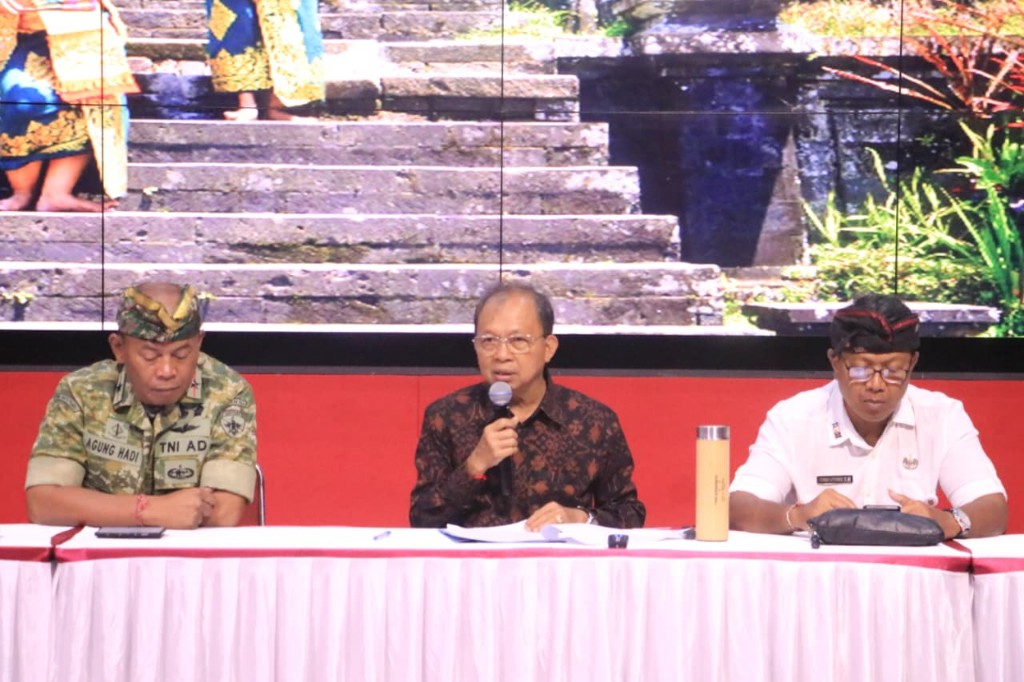
The Special Committee meeting was attended by several relevant parties, including representatives from the Municipal Police (Satpol PP) and district/city governments, who were deemed crucial for harmonizing spatial planning oversight and controlling spatial use permits in Bali. Among the special committee members present were Dr. Somvir, Secretary of the Special Committee; Putu Diah Pradnya Maharani; I Nyoman Suwitra; I Nyoman Budiutama; I Gede Harja Astawa; Wayan Gunawan; and other members. (Gab/ART/001)

Baca Artikel Menarik Lainnya : STPBI Bekali Anak Muda Bali Ketrampilan Memasak