A Thousand Years of Indonesia-India Relations
Admin - atnews
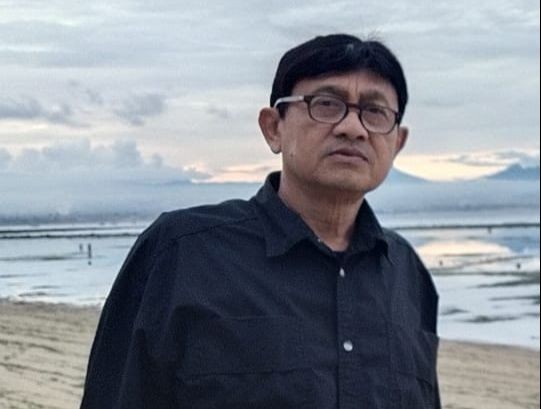
Denpasar (Atnews)—The alumnus of Gadjah Mada University and Cornell University, Putu Suasta, hoped that relations of Indonesia, especially Bali, with India can be further strengthened.
“We have a lot to learn from India as this country has advanced both in economics and politics, spiritual, yoga, medical science (Ayur Veda) including a technology center,” said Putu Suasta who is also a political and cultural observer in Denpasar, on Sunday (Aug 7).
The statement was made when KRI Sultan Hasanuddin-366 (KRI SHN-366) which was carrying out its duties in the waters of the Java Sea, namely carrying out a Passing Exercise (Passex) with the INS Sumedha ship, which is one of the proud warships of the Indian Navy.
The exercise was a direct order of the Commander of the Fleet II, Admiral of the TNI (National Armed Forces), Dr. T.S.N.B. Hutabarat, on Wednesday (Aug 03).
It was known that at that time INS Sumedha was carrying out a peaceful passage through the Java Sea (ALKI II) to Bali and resumed to Australia as the final destination. On that occasion, several training series were carried out including Flaghoist, RAS (Mailbag Transfer) and Passex.
Even the Deputy Governor of Bali, Prof. Tjokorda Oka Artha Ardhana Sukawati (Cok Ace), attended a dinner party on the deck of the Indian warship INS Sumedha which was docked at the East Pier of Benoa Harbor on Friday (Aug 5).
In his brief remarks, Deputy Governor Cok Ace welcomed the Indian navy soldiers who were members of the INS Sumedha ship.
Deputy Governor Cok Ace understood that the time for the visit of the INS Sumedha crew to Bali is currently very limited because they are bound by official duties. On that account, he hoped that one day they can return to visit as tourists to enjoy the natural beauty and culture of Bali. The visit of Indian warships is also expected to further strengthen the Bali-India relations having been established so far.
Meanwhile, the Indian Ambassador to Indonesia and Timor Leste, Manoj Kumar Bharti, expressed his joy that one of the proud warships owned by India could dock in Bali after a long voyage.
He named Bali a special location because it has been known for its natural beauty and cultural richness. Still in his speech, he conveyed a welcome to the deck of the INS Sumedha ship to all invited guests. He further added that the dinner was also a moment of thanksgiving to welcome the 75th Anniversary of Indian Independence.
A welcome speech was also conveyed by Commander P. Phaneedra. He expressed his pleasure at being able to visit Bali, which is so famous.
He explained that INS Sumedha brought 118 personnel and the ship docked at Benoa Harbor as a Port Visit in the context of the Operational Turn Round (OTR). The ship has visited Jakarta and docked in Bali on August 4-6, 2022, and after that it will depart for Surabaya.
The dinner entertainment was attended by Defense Attache of the Indian Embassy in Jakarta Amitabh Saxena, Consul General of India Mr. Prakash Chand, Air Base Commander, Naval Base Commander, Member of the Bali Regional House of Representatives Dr. Somvir, Head of Regional Office of the Ministry of Law and Human Rights of Bali as well as the Indian Diaspora who live on the Island of the Gods.
Moreover, President Joko Widodo and Prime Minister of India Narendra Modi recently held a bilateral meeting on the sidelines of the G7 Summit in Elmau, Germany, on Monday (Jun 27). Both leaders discussed efforts to strengthen cooperation in the food sector.
On that occasion, President Jokowi also expressed his appreciation for strong support extended by India for the Indonesian G20 Presidency, the highlight of the G20 Summit with the theme “Recover Together Recover Stronger” that will be held in November.
Indonesia will also fully support to India for G20 Presidency 2023. Good relations of India have existed from time immemorial, for almost two thousand years.
In 1950, the first President of the Republic of Indonesia, Soekarno, called on the people of Indonesia and India to “enhance the good relations” that had existed between the two countries “for more than 1000 years” before being temporarily “broken” by European colonial powers.
Meanwhile, in the Spring of 1966, the foreign ministers of the two countries began to speak again from the era of friendly relations. India has an embassy in Jakarta and Indonesia has an embassy in New Delhi.
India considers Indonesia as the most important member of ASEAN. The two countries have agreed to form a strategic partnership. Indonesia and India are members of the G-20, E7, Non-Aligned Movement, and the United Nations. Besides, India also includes in the BRICS—five countries with rapid economic growth consisting of Brazil, Russia, India, China and South Africa.
Suasta has learned a lot from India, and has even toured the country five times in the past 30 years. Even he once lived in the holy places for Hindus such as Punjab, Varanasi also called Benares, Banaras or Benaras, or Kashi or Kasi, posing a holy city of Hinduism located on the banks of the Ganges, in the state of Uttar Pradesh in Northern India.
Varanasi, for Hindus, is like Mecca for Muslims or Vatican for Catholics. While in India, Putu Suasta associated with saints or sadhus. According to him, Indian civilization has existed for 10,000 years. The civilization began to form into the Indian nation during the Vedic Period.
The foundations of Hinduism and the cultural aspects applied by the Vedic Civilization survive to these days. The first kingdoms in India were also established in the Vedic Period in 1200 BC.
In that era also developed Hinduism, Buddhism, and Jainism. Meanwhile, modern Indian civilization occurred in 1947 after they became independent from British colonialism.
Our founding father, Sukarno, was much inspired by Swami Vivekananda and Mahatma Gandhi. Mahatma Gandhi was one of the figures who influenced the thinking of Soekarno. Gandhi is known as a figure who taught the concepts of ahimsa, hartal, swadesi, and satyagraha. The concept is a resistance movement carried out peacefully without any resistance.
The idea of nationalism of Gandhi, known as human-nationalism, also inspired Soekarno. In some writings of Soekarno, he often wrote about the struggles of Gandhi. He also praised the strategies of Gandhi such as boycotting the products of the British trade monopoly.
In addition, in the moment of the commemoration of the 77th Independence Day of the Republic of Indonesia, Pandit Jawaharlal Nehru, an Indian figure who played an active role in supporting the independence of Indonesia, also reminded.
India is the first state that recognized the independence of Indonesia. The reason is, after Indonesia proclaimed its independence on August 17, 1945, the Dutch wanted to regain control of the Motherland.
On September 2, 1946, Jawaharlal Nehru gave official recognition of the independence to Indonesia. Then in 1949, Nehru initiated the convening of the Asian Conference to gather the strength of Asian countries in fighting colonialism and imperialism in the Asian region.
It included the relations between Indonesia and India having been started since the time of the Ramayana. “Yawadvipa” (Java) is mentioned in the Itihasa, Ramayana. It is said that Sugriwa, one of the generals of Rama, sent his men to Yawadvipa, or Java Island, to look for Sinta when she was kidnapped by Ravana.
Indians have visited Indonesia since ancient times, and ancient Indonesians (Austronesians) have started maritime trades in Southeast Asia and the Indian Ocean. The ancient Indians spread Hindu teachings and many other aspects of Indian culture including Sanskrit and the Brahmi scripts.
India has played a huge role in Indonesian culture, posing a blend of Indian, Chinese, Southeast Asian and indigenous Indonesian cultures. The traces of Indian influence are most clearly seen in the large number of loan words from Sanskrit in the Indonesian vocabulary, including in Balinese.
The name Indonesia comes from the Latin Indus, which means “India,” and the Greek nesos, which means “island” (because of the similarity of culture in these two regions). This name has been known since the eighteenth century, far before the formation of an independent Indonesia. During the Srivijaya era, many Indonesians studied at Nalanda University in India.
Indonesia entered a historical period after adopting the Pallawa and Sanskrit scripts from India. It is evident from the findings of several early inscriptions from the oldest Indonesian kingdoms such as Yupa from Kutai, the Tugu Inscription from Tarumanagara and historical records of Kalingga.
Hindu-Buddhist kingdoms such as Sriwijaya, Medang, Sunda and Majapahit were the ruling governments in Indonesia, and this classical Hindu-Buddhist era lasted from the second to the sixteenth century, with the last Hindu kingdom remaining in Bali.
Throughout the history of the two nations, most of the relations between ancient India and Indonesia were harmonious and peaceful, but there was one exception when ancient India and Indonesia were involved in war.
In 1025, Rajendra Chola, the Chola King of Coromandel in South India, launched a naval attack on the port of Srivijaya and captured Kadaram from Srivijaya and then occupied it for some time.
Indonesia has absorbed many aspects of Indian culture since its first contact nearly two thousand years ago. The most obvious impact is the absorption of Sanskrit words into Indonesian.
The Ramayana and Mahabharata played an important role in Indonesian culture and history, and are popular among Indonesians up to these days. In the Prambanan open-air theater in Java, Javanese Muslims dance the Ramayana Ballet during a full moon night.
An example of Hindu-Buddhist influence in Indonesian history is the ninth century Borobudur and Prambanan Temples.
It is also said that towards the end of the office of Made Mangku Pastika as Governor of Bali, he visited Southern part of India, namely Odisha, where the endek clothes of Bali originates.
The Odisha was visited as part of an effort to trace back the footprints of the ancestors of the Balinese people who have left a strong foundation for the history of Hindu civilization on the Island of the Gods with the values of burying Panca Datu, meaning to bury spiritually through the Mother Temple of Bali, Besakih Temple, in Karangasem District.
Even, the endek cloth conservation in the region was developed by Utkal University and the National Institute of Fashion Technology (NIFT).
In addition, there are also quite influential historical figures in Bali who learned from India, namely Prof. Ida Bagus Mantra, who is the fifth Governor of Bali, who served for two terms, namely 1978-1983 (first period) and 1983-1988 (second period).
In the course of his life, Ida Bagus Mantra continued his studies at Visva Bharati University Santineketan, West Bengal, India. He earned his master degree in 1954 while he earned his doctorate in 1957 with a dissertation entitled Hindu Literature and Religion in Indonesia.
There is also other figure like Prof. Dr. Tjokorda Rai Sudharta (son of Puri Ubud), a well-known Sanskrit expert who graduated from Sanskrit with a Bachelor of Arts at Banaras Hindu University, Master of Arts at Panjab University.
He bequeathed several books in written Bahasa Indonesia such as: Upadesa (1967), Sarasamuscaya (1976), Slokantara (1982), Asta Brata in Development (1998), Advice of Sri Rama to the Present (1990), Ramayana and Mahabrata (translation) from the author BH Sarkar (1992), Hindu Man I to Marriage (1993), Meeting God Within the Self (2005), Bhagavadgita in Bhishma Parwa (2010) and Between Greek Philosophy of Plato and Indian Philosophy Upanisad Bhagavadgita (2010).
Suasta further added that Western countries learned a lot from India, and Indonesia learned a lot from Western progress.
India is known as a country whose technological progress is growing rapidly. Moreover, India often becomes a large market for a number of technology companies. Apart from being a huge market, India also has people holding high positions in the tech giants of the world.
They are CEO of world-renowned companies posing Indian descent, such as Sundar Pichai (CEO of Alphabet and Google), Satya Narayana Nadella (CEO of Microsoft), Shantanu Narayen (CEO of Adobe Inc.), Parag Agrawal (CEO of Twitter), Arvind Krishna (CEO of IBM) as well as Anjali Sud (CEO of Vimeo).
The others are Jayshree Ullal (CEO of Arista Networks), Revathi Advaithi (CEO of Flex), Nikesh Arora (CEO of Palo Alto Networks), Sanjay Mehrotra (CEO of Micron Technology), and Grorge Kurian (CEO of NetApp).
Besides, there are Aneel Bhusri (CEO of Workday), Aman Bhutani (CEO of GoDaddy), Steve Sanghi (CEO of Microchip Technology), Sanjay Metrohtra (CEO of SanDisk), Rajeev Suri (CEO of Nokia), Vasant Narasimhan (CEO of Novartis), Ajaypal Singh Banga (CEO of MasterCard), Sanjay Mehrotra (CEO of Micron) and Laxman Narasimhan (CEO of Reckitt Benckiser Group PLC). (GAB/ART/001)

Baca Artikel Menarik Lainnya : Kemendagri Gelar KMF Cegah Ancaman Pemilu 2019